


After the heavy winter rains, the first warm, sunny days of late February trigger a terrifying sight: hundreds of flying insects emerging in your home. Here is what you need to know about termite swarms.
We have finally reached the end of February in the North Bay. The heavy, relentless winter storms are breaking, giving way to those gorgeous, sunny California days we’ve been waiting for. We are throwing open the windows, letting the fresh air in, and enjoying the warmth.
Unfortunately, we aren’t the only ones reacting to the change in weather.
This specific climatic recipe—weeks of heavy soil saturation followed by a sudden spike in sunny, warm temperatures—is the exact biological trigger for one of the most stressful events a homeowner can witness: the spring termite swarm.
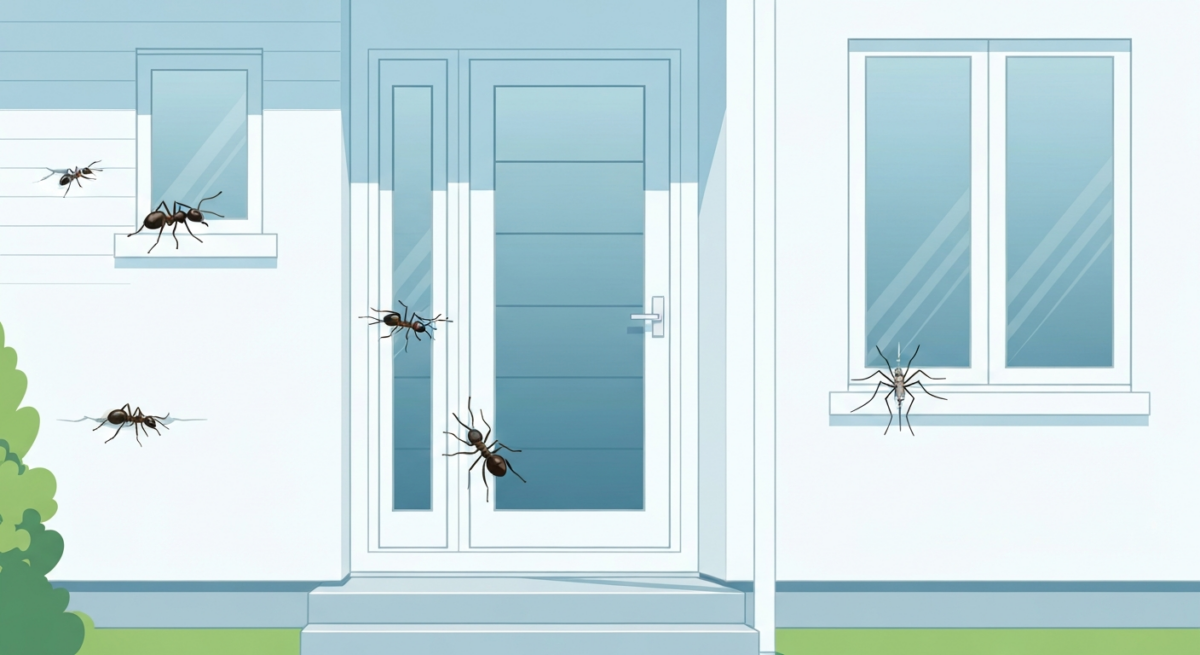
If you recently walked into your living room, bathroom, or garage and found dozens (or even thousands) of winged insects frantically buzzing around your windows or shedding their wings on your window sills, you are witnessing a swarm.
Before you panic and reach for a can of bug spray, here is a clear guide to understanding what is happening and what you need to do next.
What is a Termite Swarm?
A termite swarm is not an “attack.” It is a mating flight.
When a termite colony (either Subterranean termites in the soil or Drywood termites in your framing) matures after several years, it begins producing “alates.” These are reproductive termites equipped with wings and functioning eyes.
When the weather conditions are absolutely perfect, the colony opens a small exit hole, and thousands of these future kings and queens fly out simultaneously. Their goal is to pair up, shed their wings, drop to the ground, and burrow into wood or soil to start a brand new colony.
The Ultimate Question: Is it a Termite or a Flying Ant?
This is the number one question we get at North Point Pest Solutions during this time of year. Flying ants also swarm in the spring, and confusing the two is incredibly common. However, their treatments are vastly different.
Here is how to play detective:
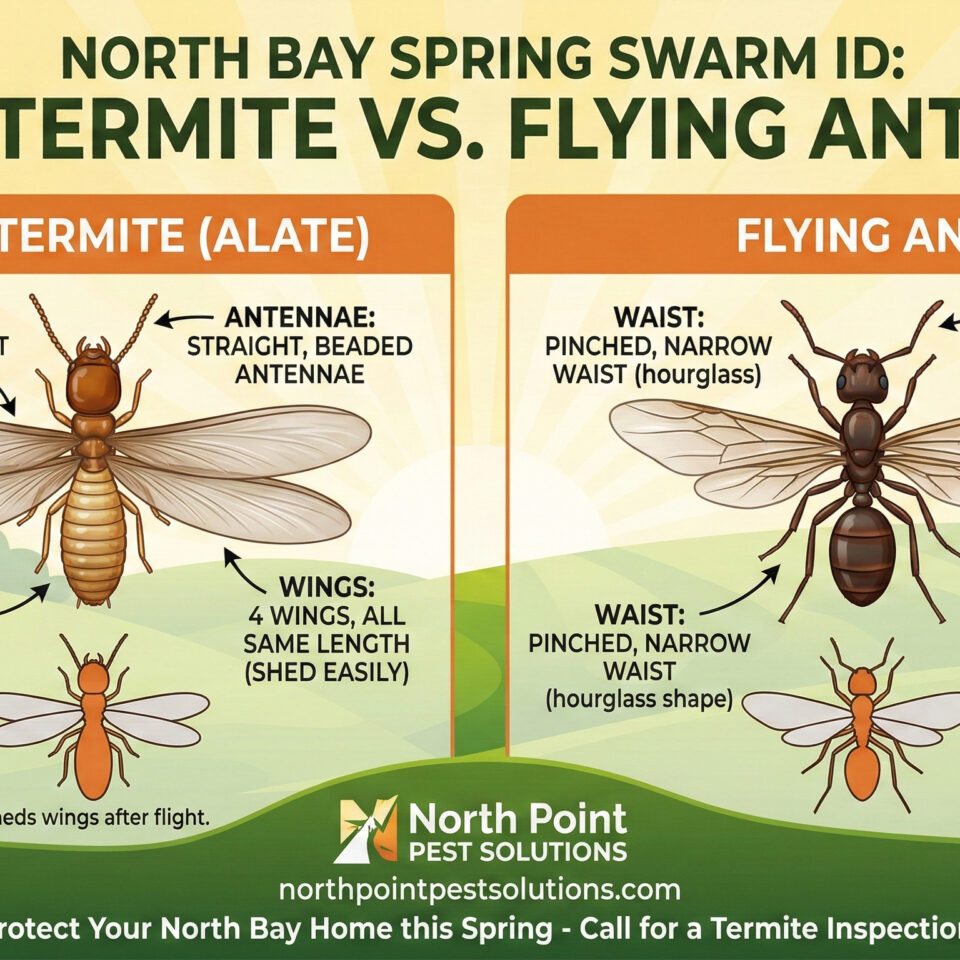
- The Waistline: Look at the body shape. An ant has a severely pinched, narrow waist (like an hourglass). A termite has a thick, broad, cigar-shaped body with no distinct waist.
- The Antennae: An ant has “elbowed” or bent antennae. A termite has completely straight antennae that look like tiny strings of beads.
- The Wings: Both have four wings. However, an ant’s front wings are much longer than its back wings. A termite has four wings of the exact same length, which they shed very easily. If you find piles of identical, translucent wings on your window sill but no bugs, you have termites.
The “Inside” vs. “Outside” Rule
If you are out on a hike in Marin or working in your Sonoma garden and see a cloud of swarming insects, it is just nature taking its course.
However, if the swarm is happening inside your home—if they are emerging from your baseboards, out of an electrical outlet, or from a crack in the drywall—it is a massive red flag.
Termites are not flying into your house from the outside to eat it. They are flying out from the inside because the mature, wood-destroying colony is already living within your walls.
Your Swarm Action Plan
If a swarm happens in your house this week, here is what you need to do:
- Do Not Spray Aerosols: Spraying them with over-the-counter bug killer will kill the alates you see, but it will cause the workers still in the wall to panic, seal up the exit hole, and move to a different, harder-to-find area of your house.
- Vacuum Them Up: The easiest and safest way to deal with the immediate mess is to simply vacuum them up and empty the canister into an outside trash bin. Swarmers cannot bite or sting you, and they cannot eat wood.
- Save the Evidence: Catch two or three of the insects and put them in a Ziploc bag. Save a few of the shed wings, too. This allows your pest professional to definitively identify the species.
- Mark the Spot: Pay close attention to exactly where they are emerging from and put a piece of blue painter’s tape next to it. This gives the inspector a starting point.
Don’t Ignore the Warning
A termite swarm is your home’s “Check Engine” light. It is a visual warning that silent damage is likely occurring behind your drywall.
Don’t wait until the swarm stops to think the problem has gone away. Contact North Point Pest Solutions immediately for a comprehensive spring termite inspection. We will identify the source of the swarm and customize a treatment plan to protect your biggest investment.