



If you’ve ever spotted a rat and thought it looked far bigger than expected, you weren’t imagining it. Big rats are common in Marin County, where dense vegetation, older housing stock, and mild winters give rodents everything they need to thrive and grow.
Before you can deal with a rat problem effectively, you need to know which species you’re dealing with and how large it can realistically get.
Rat Size by Species
Rat size varies more than most people expect. Not every rat that enters your home is going to remain a small rat scurrying through a gap in the wall. Some species grow significantly larger, and identifying them by size and appearance is the first step toward understanding what you’re up against.
Brown Rat
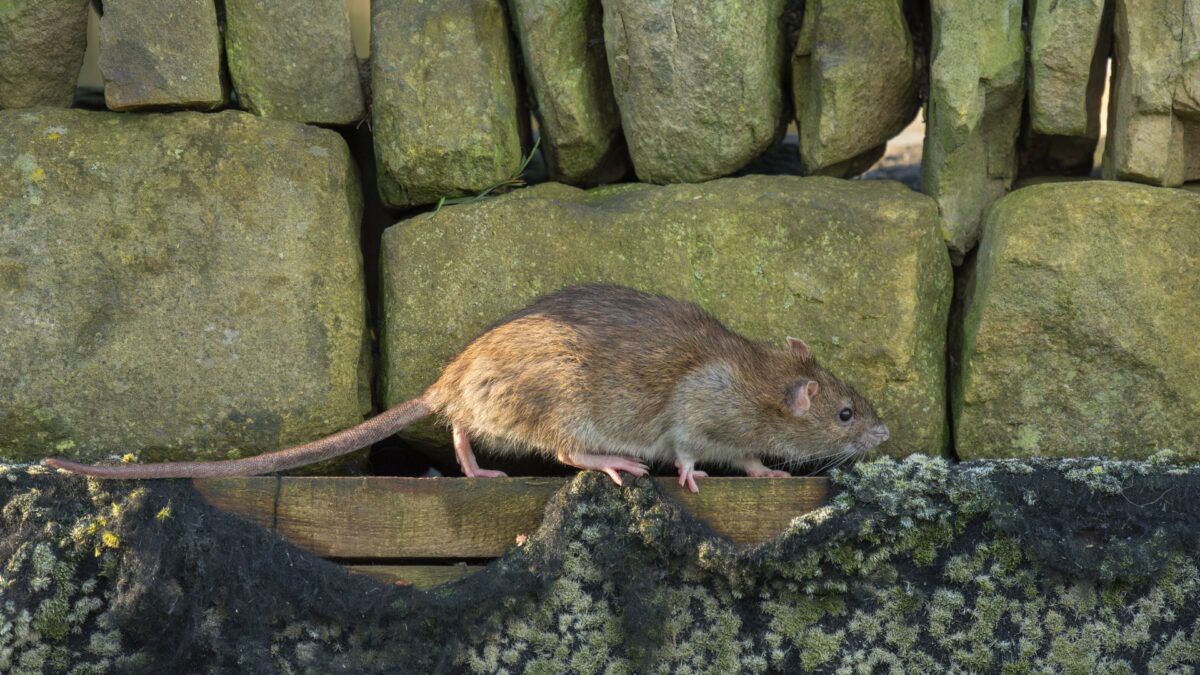
Brown rat
Brown rats rank among the most common rodents found in California homes. Adults measure between 7 and 10 inches in body length, with tails adding another 6 to 8 inches. Older adults can weigh close to a pound, and well-fed ones tend to look noticeably stocky.
What many homeowners describe as big fat rats are almost always mature brown rats with consistent access to food sources.
Brown rats are thick-bodied, with coarse brownish-gray fur and blunt snouts. Strong gnawers, they chew through wood and soft metals and rarely travel far from a reliable food source.
Norway Rat / Norwegian Rat
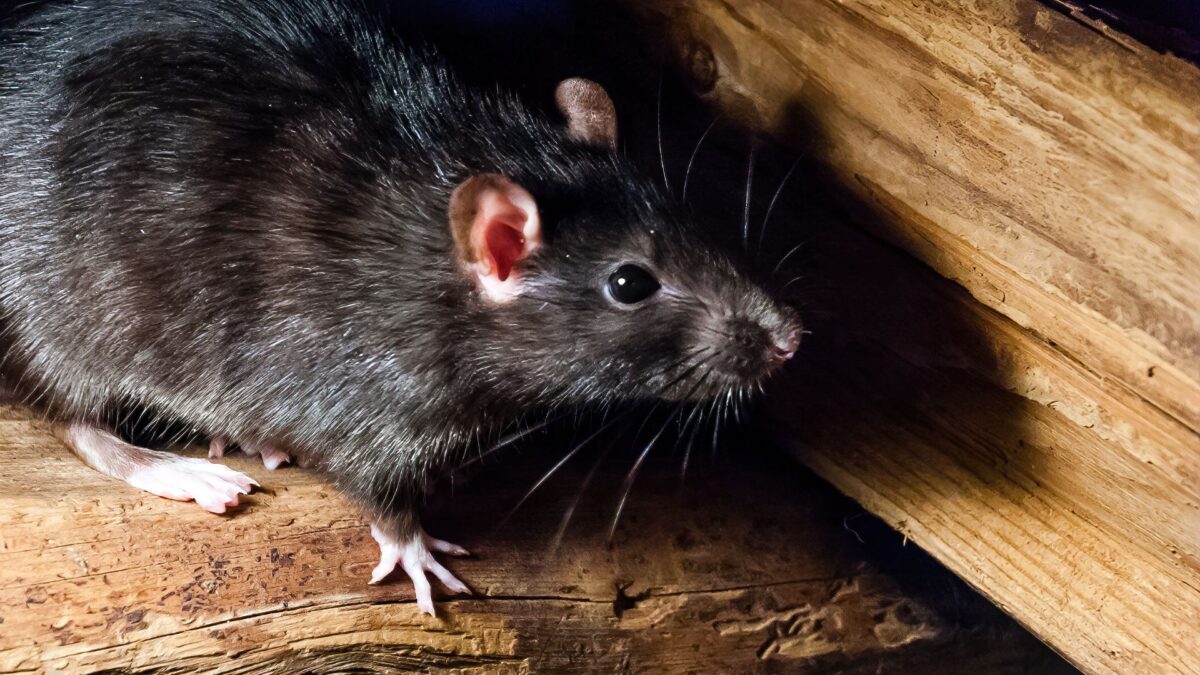
Norway rat
Norway rats and brown rats are the same species: Rattus norvegicus. Despite the name, Norway rats didn’t originate in Scandinavia. They likely spread across Europe via trade ships from Asia and reached North America the same way.
In Marin County, Norway rats are the species most likely to burrow beneath your home, nest inside wall voids, or settle along drainage areas near creek beds. Where these rats live on your property depends on available shelter and food. Norway rats favor ground-level access points: gaps under doors, breaks in foundation vents, and openings around utility lines.
A common misconception worth clearing up: rats don’t hibernate. Cold weather drives them closer to structures and indoors more often, not less. If rat activity spikes on your property in fall and winter, that’s exactly why.
Largest Breed of Rat
Among all rat species, the Gambian pouched rat holds the title of the largest breed of rat. Native to sub-Saharan Africa, it can reach up to three feet in total length and weigh over four pounds, making it the largest rat in the world by most classifications.
You won’t encounter one in a Marin County home, but understanding the full scale of rat species puts local infestations in perspective.
For a broader context, the largest rodent on earth is the capybara, a semi-aquatic mammal weighing well over 100 pounds. Beavers typically rank as the second-largest rodent. Rats don’t come close to either in size, but a full-grown Norway rat in your crawl space is still a serious problem.
Pet rats, for what it’s worth, are domesticated Norway rats. Selective breeding and controlled living conditions keep them smaller and calmer than their wild counterparts, but they share the same species lineage.
Factors Affecting Rat Size
Several factors determine how large a rat grows, and understanding them explains why rats in some homes grow noticeably bigger than in others.
Diet is the primary driver. Rats with easy access to high-calorie food sources, including unsecured garbage, pet food left outdoors, and fruit trees, grow larger and faster than those foraging in areas with limited resources. Marin County properties with compost bins, outdoor dining areas, or fruit-bearing trees are especially attractive to well-fed, large rats.
Age matters too. Rats grow throughout their lives, so an older rat is almost always a bigger rat. A Norway rat living inside your walls for a year will be noticeably heavier than one caught in a trap after a few weeks.
Environment rounds out the picture. Rats living in warm, sheltered spaces with low predator pressure grow faster and larger than those in exposed conditions. Attics, wall voids, and crawl spaces in older Marin County homes offer exactly the kind of undisturbed environment that lets rats grow, breed, and expand their numbers.
Getting ahead of an infestation starts with understanding what professional rodent control actually involves and how treatments differ based on species, size, and nesting location.
Large Rat Species Identification
Spotting signs of a large rat requires knowing what to look for beyond the animal itself:
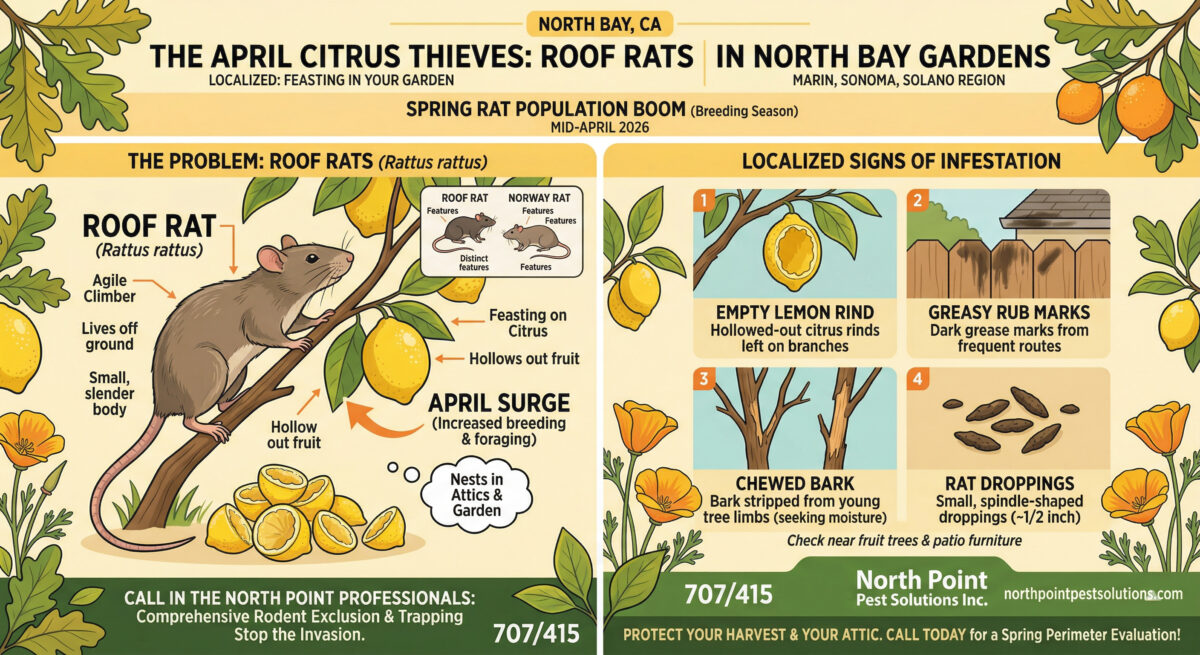
- Droppings: Norway rat droppings are roughly 3/4 inch long and capsule-shaped. Finding them consistently in one area points to an active travel route or nesting site nearby.
- Gnaw marks: Large rats leave wide, deep gnaw marks on wood, plastic, and soft metals. Fresh marks appear pale and lighten in color; older ones darken over time.
- Burrows: Norway rats dig. Look for golf ball-sized entry holes along fence lines, under sheds, or near foundation edges.
- Grease marks: Rats travel the same routes repeatedly and leave dark smear marks along walls, beams, and pipes from the oils in their fur.
- Sounds: Scratching or thumping in walls and ceilings at night, especially in heavier patterns, often point to a mature rat rather than a mouse.
Finding more than one of these signs means you’re likely dealing with an established population, not a single rat passing through.
North Point Pest Solutions Can Handle Rats of Any Size
Rat size affects how much damage they cause, how fast they breed, and how difficult they are to remove without a targeted plan. Big rats chew through insulation, contaminate food storage areas, and create entry points that invite in other rodents. A problem like that doesn’t shrink on its own.
Contact North Point Pest Solutions to schedule your inspection and get a plan in place before the problem grows.