


That annoying buzz near your ear didn’t come from nowhere. Female mosquitoes need standing water to complete their life cycle, and they’re surprisingly good at finding it around your property.
Understanding where mosquitoes breed helps you eliminate their nurseries before they become a backyard problem. Most breeding sites sit within 100 feet of your home, making mosquito control a very local effort.
Let’s explore the hidden spots where these pests multiply and what you can do to stop them.
Common Mosquito Breeding Sites & Water Sources
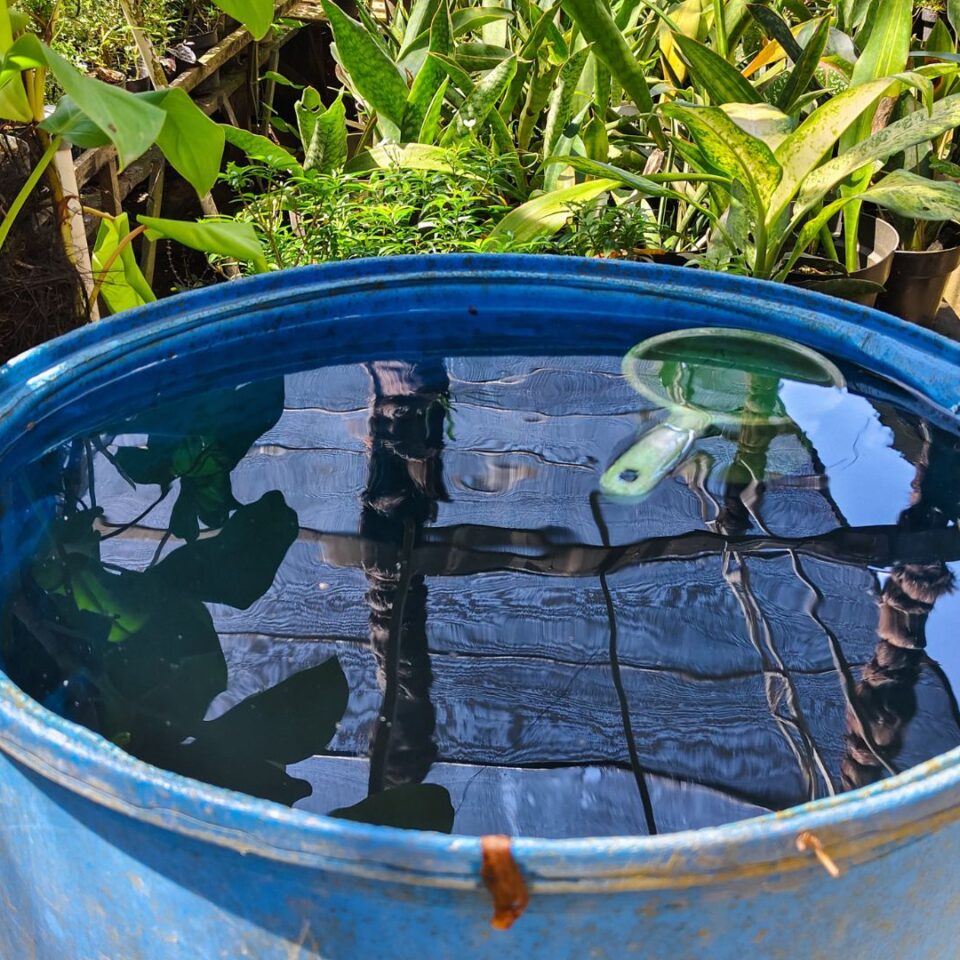
Mosquitoes don’t need much water to reproduce. A bottle cap filled with rainwater can host dozens of larvae. Any standing water that remains undisturbed for more than a few days becomes a potential mosquito breeding ground.
Check these common breeding spots around your property:
- Clogged gutters – Leaves and debris trap water, creating perfect mosquito habitats
- Flower pots and saucers – Water collects in drainage dishes and sits for days
- Bird baths – Stagnant water attracts mosquitoes faster than birds
- Old tires – These trap rainwater and warm up quickly in the sun
- Kids’ toys – Sandbox lids, buckets, and plastic toys collect water after storms
- Pool covers – Sagging covers create pockets of standing water
- Tree holes and stumps – Natural cavities fill with water and stay hidden
- Pet water bowls – Outdoor bowls left unchanged become breeding sites
- Storm drains – These often contain stagnant water year-round
Mosquitoes lay eggs directly on water surfaces or on moist soil that will flood later. Different mosquito species prefer different breeding places. Some thrive in clean water like birdbaths, while others breed in dirty water found in storm drains.
Identifying Mosquito Larvae in Water
Look for tiny, wriggling creatures at the water’s surface. Mosquito larvae hang head-down from the surface, breathing through a siphon tube. They’re often called “wigglers” because of their jerky swimming motion.
What do mosquito larvae look like in water exactly? They have segmented bodies about 1/4 inch long with a distinctive head capsule. A small breathing tube extends from their tail end to the water surface.
If you spot these wigglers, you’ve found an active breeding site that needs immediate attention.
Mosquito Breeding Patterns & Lifecycle
Female mosquitoes lay 100-300 eggs at a time, often returning to the same spot repeatedly. The complete mosquito lifecycle from egg to adult takes just 7-14 days in warm weather.
Why do mosquitoes like water so much? Their larvae must develop in water. Without it, the species cannot survive. This dependency makes targeting water sources your most effective control strategy.
Temperature dramatically affects mosquito breeding speed. Warm water accelerates development, while cooler water slows it down. This explains why mosquito populations explode during hot, humid weather.
The lifespan of mosquitoes varies by species and conditions. Males live about a week, while females can survive several weeks to months. During that time, a single female may lay multiple batches of eggs, creating exponential population growth.
Peak Mosquito Season in Your Region
Mosquito breeding season typically runs from spring through fall, but exact timing depends on your local climate. In warmer southern states, mosquitoes breed nearly year-round. Northern regions see peak activity from May through September.
The first warm rains of spring trigger massive hatches. Summer brings the highest mosquito numbers with consistent warmth and afternoon thunderstorms providing ideal breeding conditions.
Fall mosquito activity often surprises people. These pests remain active until sustained freezing temperatures arrive. Late-season mosquitoes are often more aggressive as they prepare for winter.
Local mosquito abatement programs track breeding patterns and population levels. However, homeowners must take responsibility for eliminating standing water around their own homes.
NorthPoint’s Mosquito Program: In2Care
Traditional mosquito treatment focuses on killing adult mosquitoes. NorthPoint Pest Solutions Inc. uses a smarter approach that targets breeding sites directly.
The In2Care system attacks mosquitoes where they’re most vulnerable – during their larval stage. This innovative mosquito treatment uses strategically placed stations that female mosquitoes mistake for ideal breeding sites.
How the In2Care System Works
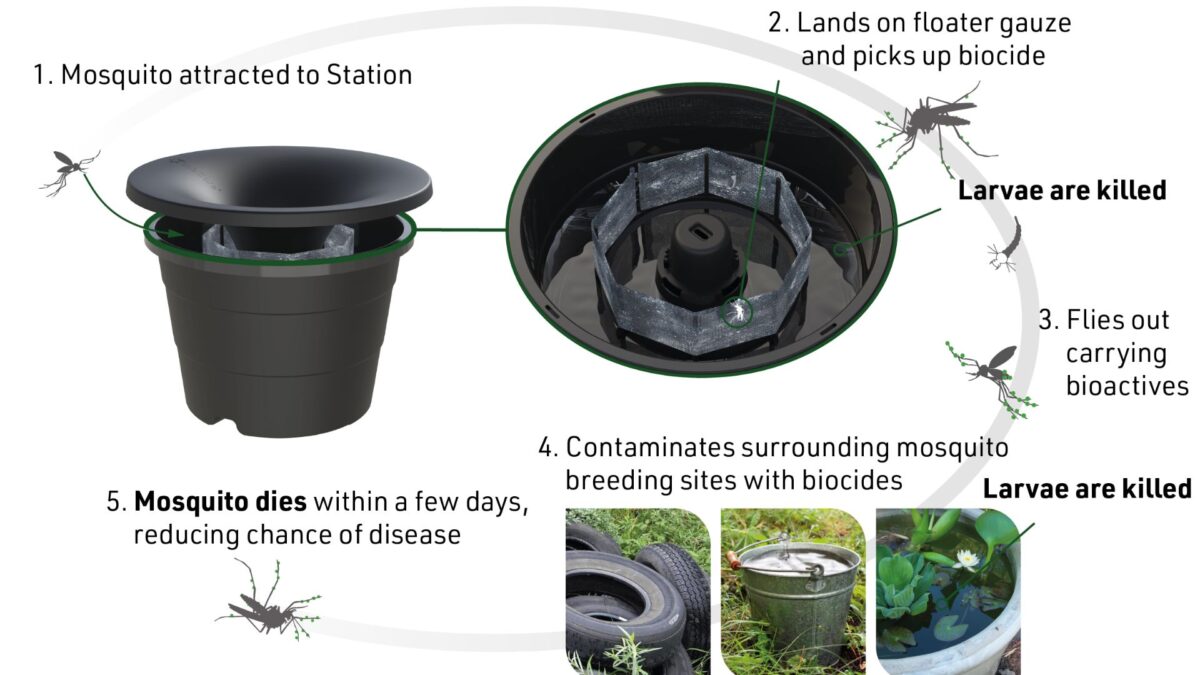
The In2Care station creates a cycle that eliminates mosquitoes at multiple life stages:
Step 1: Attraction – Female mosquitoes searching for breeding sites are drawn to the In2Care station. The design mimics their preferred egg-laying locations.
Step 2: Contamination – Inside the station, mosquitoes land on special netting treated with two active ingredients. They pick up a slow-acting fungus that will kill them and a larvicide powder that sticks to their bodies.
Step 3: Spread – The contaminated mosquito flies away carrying the biocides. She visits multiple breeding sites around your property to lay eggs, unknowingly spreading the larvicide to each location.
Step 4: Breeding Site Elimination – When she rests or lays eggs at other water sources, the potent larvicide transfers from her body into the water. This kills larvae in breeding sites you can’t even see or reach.
Step 5: Adult Elimination – Within a few days, the fungus takes effect and the adult mosquito dies. This reduces your mosquito population and the chance of disease transmission.
Mosquitoes become unwitting agents of their own population control, reaching hidden breeding spots you can’t easily access.
Long-Term Mosquito Relief
The In2Care approach provides longer-lasting mosquito control than traditional mosquito spray company treatments. Instead of just knocking down adult populations temporarily, it prevents new generations from emerging.
This mosquito removal service works continuously throughout the season. The stations remain active for months, reducing your mosquito population week after week.
Mosquito control cost varies based on property size and mosquito pressure. However, the In2Care system often proves more cost-effective than repeated barrier spray applications. It also uses fewer chemicals, making it safer for beneficial insects.
Take Control of Your Yard Today
Mosquitoes might be breeding closer than you think, but you don’t have to tolerate them. Combining source reduction with professional treatment gives you the best protection.
NorthPoint Pest Solutions Inc. offers complete mosquito treatment programs customized for your property. Our team identifies breeding sites and implements the In2Care system for season-long relief.
Ready to reclaim your outdoor spaces? Contact NorthPoint Pest Solutions Inc. today for a free mosquito control evaluation and discover how we can help you enjoy a bite-free summer.