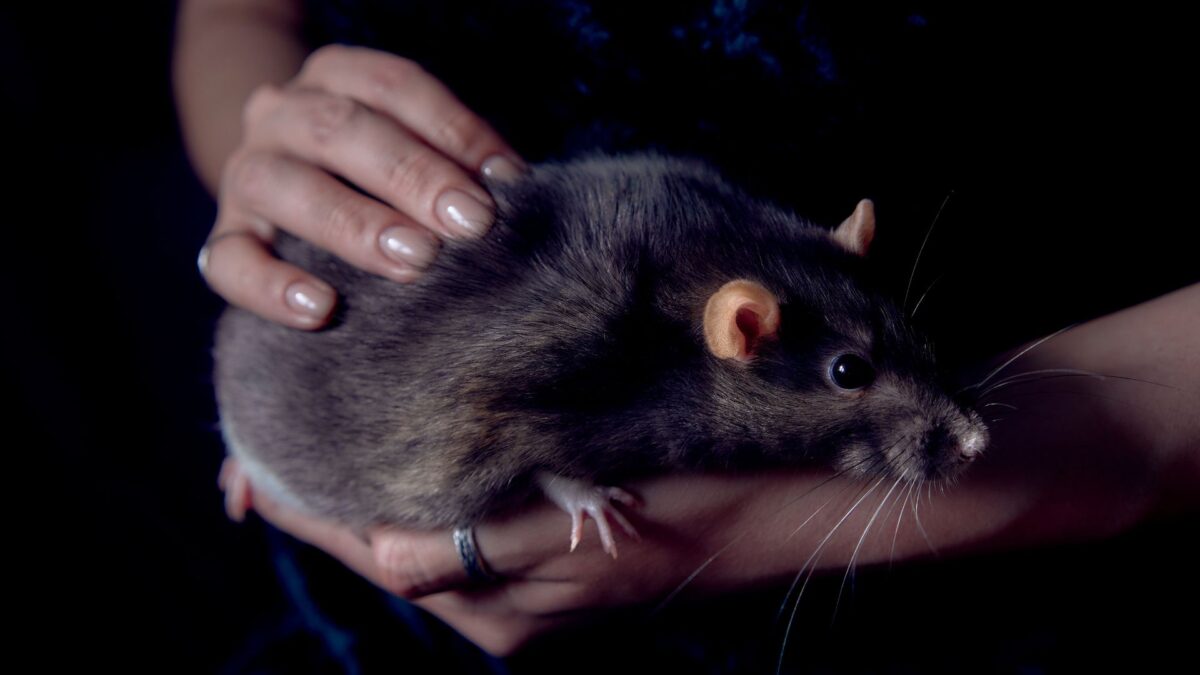



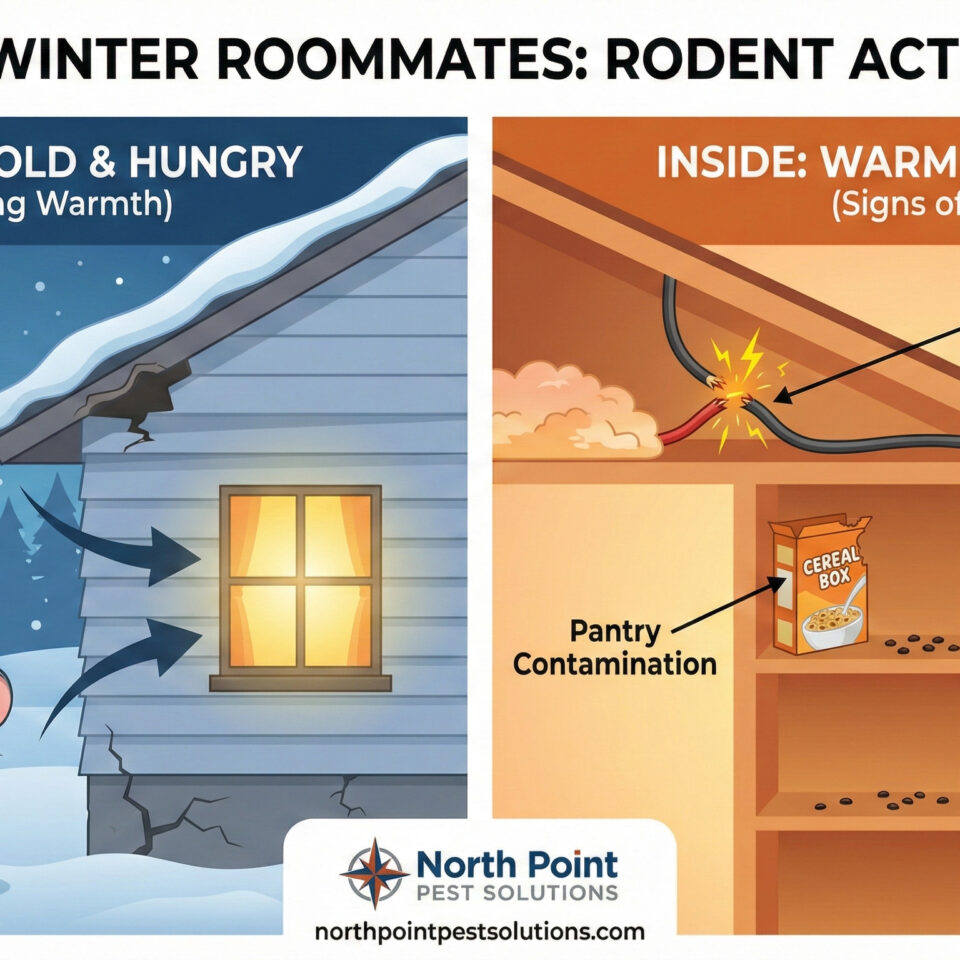
As temperatures drop in the North Bay, mice and rats are actively seeking winter lodgings. Is your home unknowingly rolling out the welcome mat?
As we head into the deepest part of winter here in Benicia and the wider North Bay, most of us are focused on staying warm. We’re cranking up the heat, enjoying cozy evenings indoors, and perhaps still grazing on the last of the holiday leftovers.
Unfortunately, we aren’t the only ones seeking refuge from the damp, chilly nights.
Late December through February is prime time for rodent infestations in our region. While you might associate pests more with the buzzing insects of summer, winter is when the “heavy hitters” of the pest world—rats and mice—become their most aggressive in trying to enter human structures.
If you hear a faint scratching in the walls late at night or notice something amiss in the pantry, you might have silent winter roommates who decided your home is their new winter resort.
Why the Winter Surge?
It’s a simple matter of survival. Outside resources become scarce during a North Bay winter. Natural food sources dry up, and temperatures drop. Your home, by contrast, is emitting warmth from every crack and crevice. To a rodent, your house is a beacon of heat, shelter, and, usually, easily accessible food.
In our area, we deal primarily with two culprits:
- Roof Rats: These agile climbers love the mature trees common in Benicia neighborhoods. They often access homes via overhanging branches, entering through damaged eaves, attic vents, or gaps in the roofline.
- House Mice: Incredibly tenacious, a mouse can squeeze through a hole the size of a dime. They often enter at ground level through gaps around utility pipes, under garage doors, or through cracks in the foundation.
The Signs You aren’t Alone
Rodents are nocturnal and notoriously secretive. You will likely see the signs of their presence long before you see the animals themselves.
- Sounds in the Night: The most common first sign is auditory. Scratching, scurrying, or gnawing sounds coming from attics, wall voids, or crawlspaces, particularly late at night when the house is quiet.
- The Pantry Raid: Finding food packages that have been chewed into, especially corners of cereal boxes, bags of flour, or pet food bags stored in the garage.
- Droppings: This is the undeniable proof. Mouse droppings look like dark grains of rice. Rat droppings are larger, about the size of an olive pit. Finding these in cupboards, along baseboards, or in the garage is a sure sign of an active infestation.
More Than Just a Nuisance
It’s easy to brush off a mouse as just a nuisance, but allowing rodents to overwinter in your home is a legitimate risk.
Beyond the “ick” factor of them getting into your food, rodents are chewers. Their teeth never stop growing, so they must gnaw constantly to file them down. They will chew on wood framing, drywall, and, most dangerously, electrical wiring. Rodent-chewed wires are a leading, undocumented cause of undetermined house fires. Furthermore, they carry diseases and parasites that can compromise the air quality of your home.
Start the New Year Secure
Many homeowners attempt to tackle this with a few hardware store traps. While you might catch one or two, you are likely missing the larger nest hidden away in the insulation. Furthermore, traps don’t solve the root cause: how they are getting in.
Effective winter rodent control requires a two-pronged approach: trapping the current population and, crucially, “exclusion”—sealing the entry points to prevent future invaders.
Don’t let rodents settle in for the winter. If you suspect activity, start the New Year with peace of mind. Contact North Point Pest Solutions for a thorough inspection, and let us evict your unwanted winter guests for good.