


Mid-March is a glorious time in the North Bay. The days are getting longer, the hills are vibrantly green, and the damp chill of winter is officially behind us. It’s the perfect weather to spend more time outside in your yard or take your dog for longer walks downtown.
Unfortunately, the exact same climate conditions that make you want to spend time outdoors are acting as a biological alarm clock for one of our most frustrating local pests: the cat flea (which, despite the name, happily targets dogs and humans, too).
If you’ve noticed your pet scratching a little more than usual this week, you might be at the very beginning of a spring flea explosion. Here is what is happening in your yard right now and how to stop it before it moves indoors.
The “Sleeping” Threat
To understand why fleas seem to appear out of nowhere in March, you have to understand their incredible survival skills.
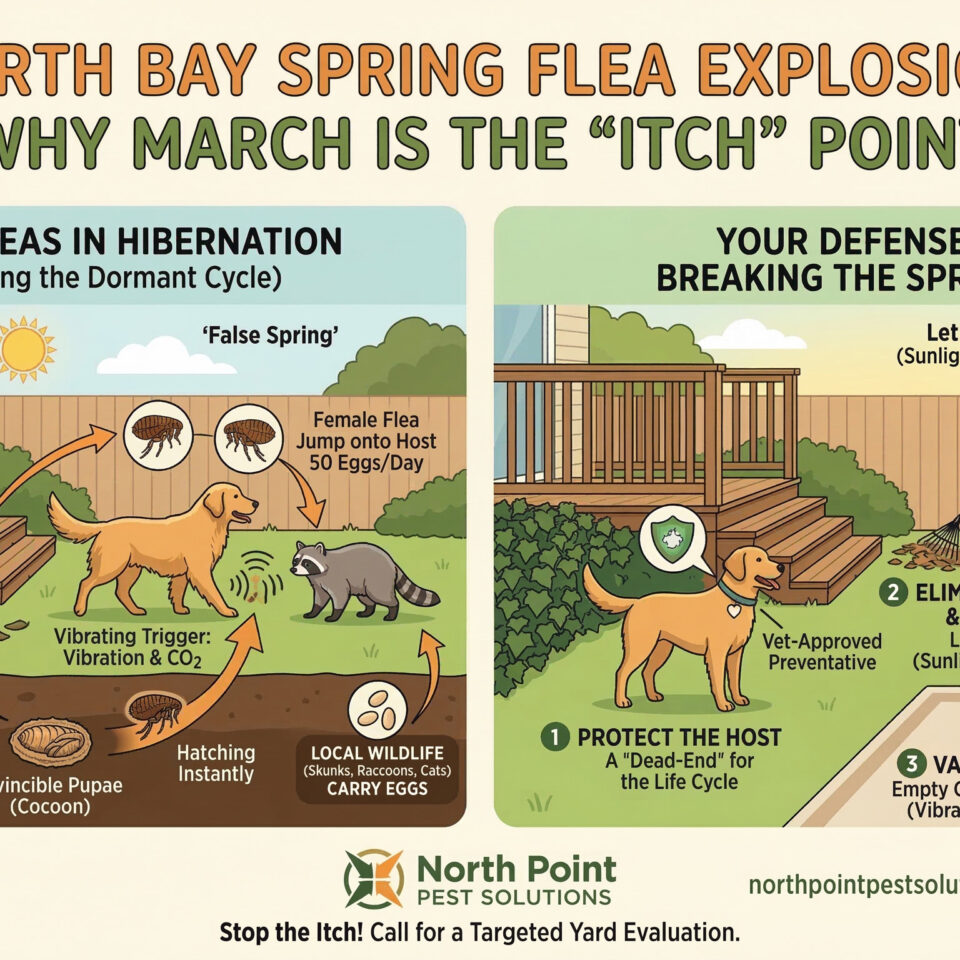
During the cold, wet North Bay winter, flea development stalls. They enter the pupal stage, spinning tiny, incredibly tough cocoons. Inside these casings, they are practically invincible to freezing temperatures, heavy rains, and even most over-the-counter pesticides.
They can lay dormant in your yard’s soil, under your deck, or in leaf litter for months, just waiting for the right conditions. Now that our daytime temperatures are consistently hitting the 60s and 70s, the stage is set. But they don’t hatch blindly; they wait for a host. When a warm-blooded animal (like your golden retriever or a neighborhood raccoon) walks by, the vibration of their footsteps and the carbon dioxide from their breath trigger the pupae to hatch instantly. The adult flea jumps onto the host, takes a blood meal, and begins laying up to 50 eggs a day.
Your Yard’s Danger Zones
Fleas do not like direct, baking sunlight. If you have a short, well-maintained lawn right in the middle of your yard, it’s unlikely to harbor many fleas.
Instead, they thrive in the “micro-climates” around your property. Look for areas that provide shade, moisture, and protection from the wind. The most common flea hotspots in Benicia yards include:
Underneath Decks and Porches: This is prime real estate, especially if local wildlife (like skunks or feral cats) used these areas to shelter during the winter, dropping thousands of flea eggs into the dirt.
Dense Shrubbery: The shaded, damp soil under your prize rose bushes or thick ivy beds.
Pet Resting Areas: Wherever your dog likes to lay down in the dirt to cool off under a tree.
Breaking the Spring Cycle
A flea infestation is a numbers game. Because they reproduce so rapidly, a mild yard problem this week will become a severe indoor infestation by April. To protect your home, you need a multi-layered approach:
Protect the Host: First and foremost, ensure your pets are on a vet-approved, continuous flea preventative. This turns your pet from a walking food source into a dead-end for the flea life cycle.
Let the Sun In: Trim back dense vegetation, rake up lingering wet leaf litter from the winter, and keep your grass mowed. Exposing shaded soil to direct sunlight dries out the micro-climates that flea larvae need to survive.
The Power of the Vacuum: If your pet has already brought a few hitchhikers inside, vacuum your carpets, rugs, and furniture daily. The vibration of the vacuum actually forces hidden indoor pupae to hatch, allowing you to suck them up immediately. Always empty the canister outside directly into the trash.
Call in the Cavalry
Once fleas are established in your yard and home, breaking the life cycle with DIY methods can feel like an impossible, exhausting loop of bathing, spraying, and vacuuming.
If you are losing the battle against the “spring itch,” it is time to bring in professional reinforcements. North Point Pest Solutions provides targeted, exterior yard treatments that eliminate fleas at the source before they can cross your threshold.