


It’s the first week of January, and the scratching in the walls has begun. Before you reach for a store-bought trap, you need to understand how they got in in the first place.
Welcome to the first full week of 2026. The holiday decorations are (mostly) down, the New Year’s resolutions are set, and winter has firmly settled into the North Bay.
For many homeowners, this time of year brings an unwelcome realization: you aren’t alone in your house. As temperatures dropped over the last few weeks, mice and roof rats sought shelter, and they likely found it in your attic, crawlspace, or garage.
If you’ve heard the tell-tale scratching at night or found droppings in the pantry, your first instinct is probably to run to the hardware store for traps. While trapping the current intruders is necessary, it is only 50% of the solution.
If you catch a mouse today, what stops his cousin from coming in tomorrow?
To truly solve a winter rodent issue, you need to move beyond temporary “pest control” and embrace permanent “rodent exclusion.”
The Sinking Boat Analogy
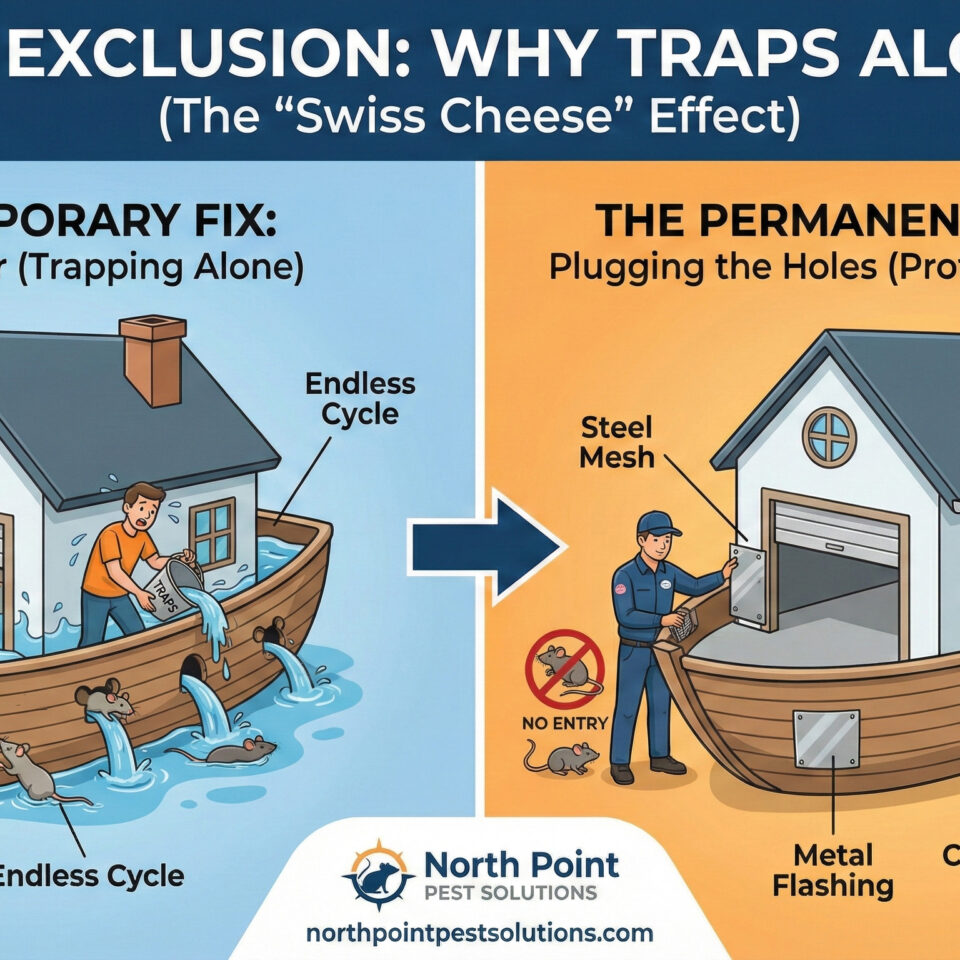
Think of your home like a boat out on the water. If the boat starts taking on water, you can grab a bucket and start bailing (this is trapping). You might keep up for a while, but if you don’t find the hole in the hull and plug it, you will be bailing water forever.
Your home is likely sustaining the “Swiss Cheese” effect—it has small holes, cracks, and gaps that are invisible to you, but are neon “Vacancy” signs to a rodent seeking warmth. Exclusion is the detailed process of finding and professionally sealing every single one of those entry points.
Where Are They getting In?
It doesn’t take much. A house mouse can squeeze its entire body through a hole the size of a dime. A rat only needs the size of a quarter. In our area, these are the most common vulnerabilities:
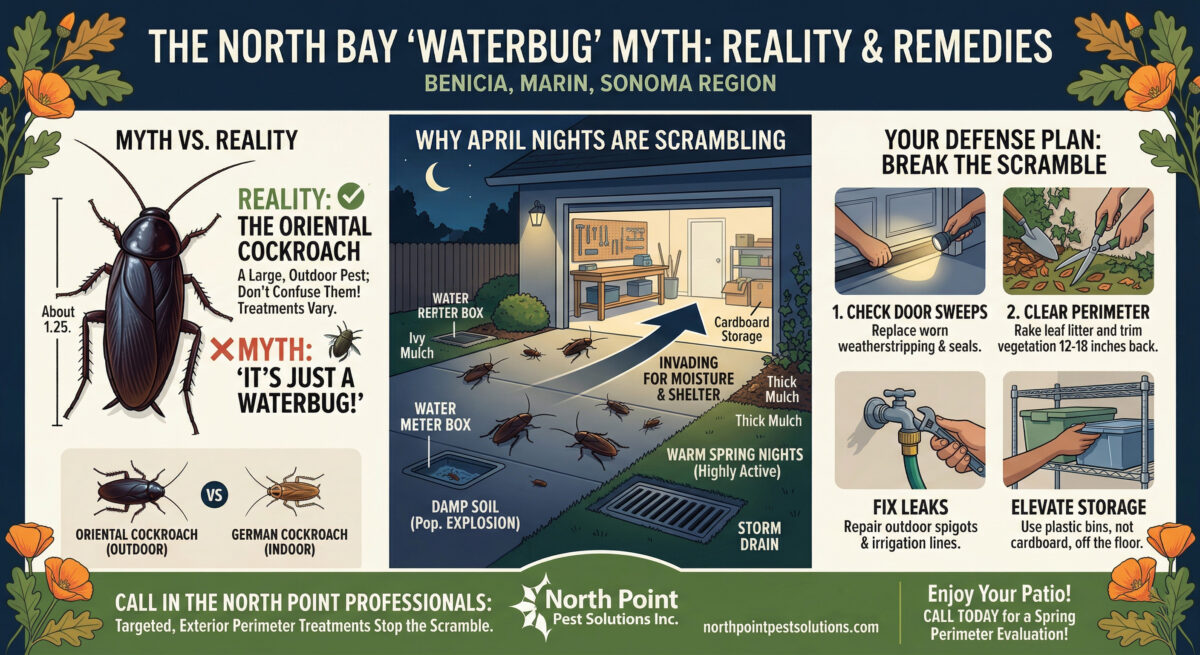
1. The Garage Door Seal Go into your garage during the day and close the door. Turn off the lights. Do you see sunlight peeking through at the bottom corners? The rubber weather stripping on garage doors gets brittle and cracks in the winter cold. If light can get through, a mouse can walk right in, giving them access to your garage and, usually, the rest of the house.
2. Utility Penetrations Walk around the exterior of your house. Look at where the A/C lines, gas pipes, plumbing, or electrical conduits enter the walls. Builders rarely seal these perfectly tight. Mice feel the warm air escaping from around these pipes and follow the tunnel right into your walls.
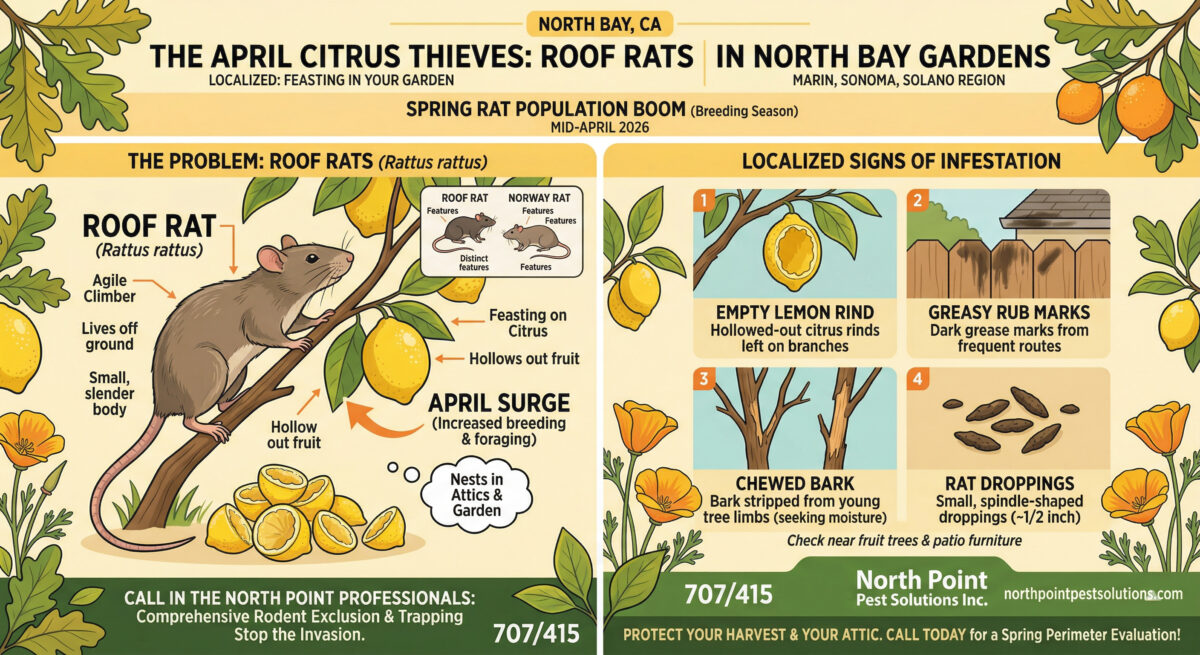
3. The Roofline and Eaves This is famously roof rat territory. They are excellent climbers and will use trees or power lines to access your roof. They look for gaps where roof eaves meet the house siding, damaged attic vents, or loose flashing around chimneys. These high-entry points are almost always missed by homeowners doing their own inspections.
Why DIY Sealing Often Fails
When homeowners do find a hole, their first reaction is often to grab a can of expanding spray foam.
Here is the hard truth: rodents love spray foam. It’s easy to chew through and makes excellent insulating nesting material.
Professional exclusion requires materials that rodents cannot gnaw through. We use heavy-gauge galvanized steel mesh, copper wool (which doesn’t rust), metal flashing, and specialized concrete patches to ensure that once a hole is sealed, it stays sealed.
Seal the Deal for 2026
Don’t spend the new year playing an endless game of whack-a-mole with snap traps. If you want peace of mind this winter, you need to seal the envelope of your home.
Contact North Point Pest Solutions today for a comprehensive inspection. Let us find the holes in the hull and close the door on winter pests for good.