


The late February sun is finally drying out the yard, but those fresh piles of dirt mean a subterranean invasion is underway. Here is how to tell if you have a gopher or a mole, and how to stop them.
We have reached the end of February in the North Bay. The heavy winter rains are becoming less frequent, and we are finally getting those beautiful, sunny “False Spring” days. It’s the time of year when we start stepping out into our yards, planning our spring gardens, and inspecting the landscaping.
Unfortunately, as you survey your lawn this week, you might notice an unwelcome addition: fresh, ugly mounds of dirt scattered across the grass.
While you were inside staying warm this winter, a subterranean turf war was brewing. The soft, rain-soaked soil of Benicia and the surrounding areas provides the absolute perfect digging conditions for underground pests. As spring approaches, their activity kicks into high gear.
But before you try to tackle the problem, you have to know who you are fighting. The two most common culprits are pocket gophers and moles, and treating them requires completely different strategies.
The Identity Crisis: Gopher vs. Mole
Because these animals live almost entirely underground, you will likely never see the actual creature. You have to play detective and look at the evidence they leave behind on the surface.
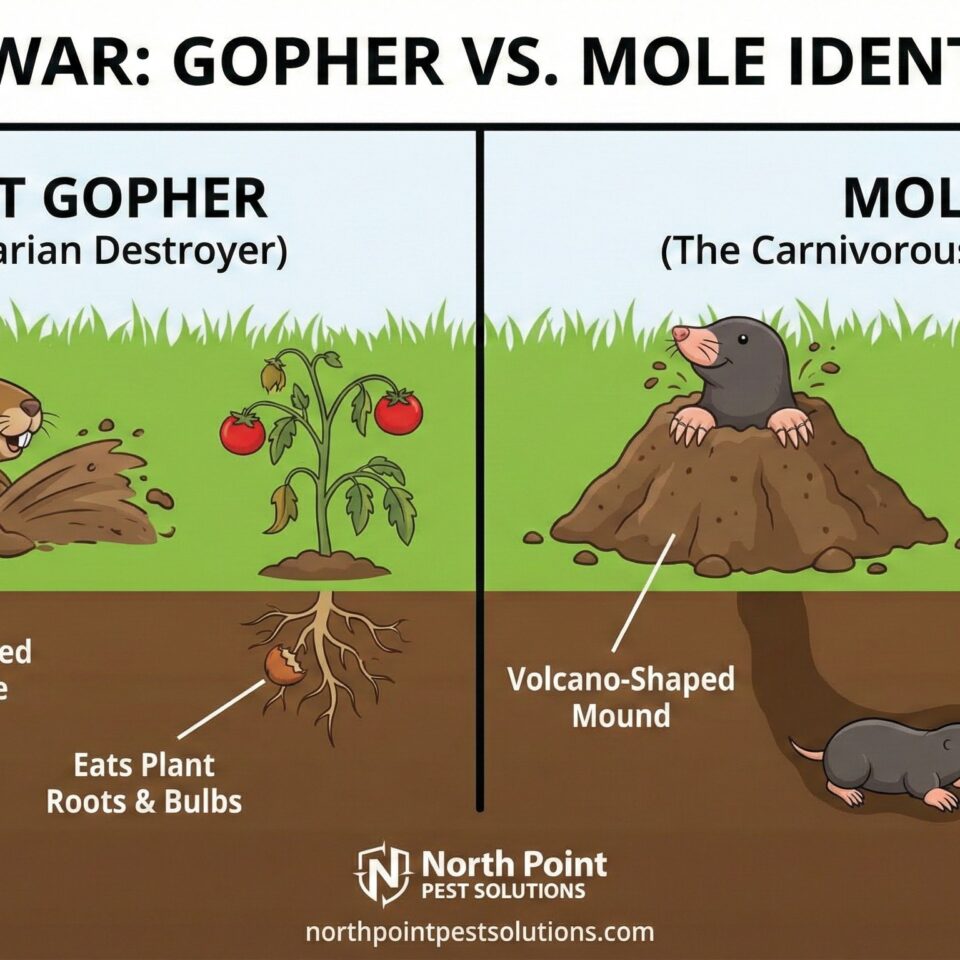
1. The Pocket Gopher (The Vegetarian Destroyer) Gophers are rodents, strictly herbivores, and they are out to eat your landscaping. They feed on the roots of grass, flowers, vegetables, and even small trees. If an entire plant suddenly wilts or gets pulled down into the earth from below, you have a gopher.
- The Mound: Gopher mounds are very distinct. As they excavate their tunnels, they push dirt to the surface at an angle. This creates a fan-shaped or crescent-shaped mound. Look closely, and you will usually see a round “plug” of dirt off to one side where they sealed the hole behind them.
2. The Mole (The Carnivorous Excavator) Moles are not rodents; they are insectivores. They do not care about your prize-winning tulips or your vegetable roots. They are swimming through the soil looking for earthworms, grubs, and insects. The damage they cause is not from eating your plants, but from the sheer volume of soil they displace while hunting.
- The Mound: Moles dig deep tunnels for their main nests but often forage very close to the surface, especially in moist spring soil. Their mounds are volcano-shaped, symmetrical piles of dirt pushed straight up. You will also often see raised, winding ridges breaking the surface of the grass as they tunnel just beneath the turf.
Why Now? The Spring Push
The ground is saturated from winter storms, making digging incredibly easy right now. But more importantly, the end of February signals the beginning of the spring breeding season for both of these pests.
The males are expanding their territories rapidly to find mates. A single, energetic gopher can create up to 70 mounds in a month. They are literally preparing the “nursery” for the next generation of destroyers.
The Cost of Delaying Treatment
You cannot wait until you want to plant your summer garden to deal with this problem.
Beyond making your lawn look like a minefield and ruining expensive landscaping, these tunnel networks can cause severe damage below the surface. Gophers are notorious for chewing through underground PVC irrigation lines and low-voltage landscape lighting wires in the North Bay. Left unchecked, their tunnels can undermine walkways, patios, and even small retaining walls.
Stop the Digging
The internet is full of “DIY solutions” like flooding the tunnels with a garden hose, pouring used cat litter into the holes, or dropping in sticks of chewing gum. None of these work. Sonic spikes are largely ineffective, and toxic baits sold at hardware stores are incredibly dangerous to neighborhood pets, owls, and hawks.
Don’t let your spring gardening plans be derailed by a subterranean invasion.
If you see the telltale signs of gophers or moles in your yard this week, contact North Point Pest Solutions. Our specialized, professional trapping methods target the current invaders and eliminate the problem at the source.
Let us help you reclaim your yard before spring officially arrives!