


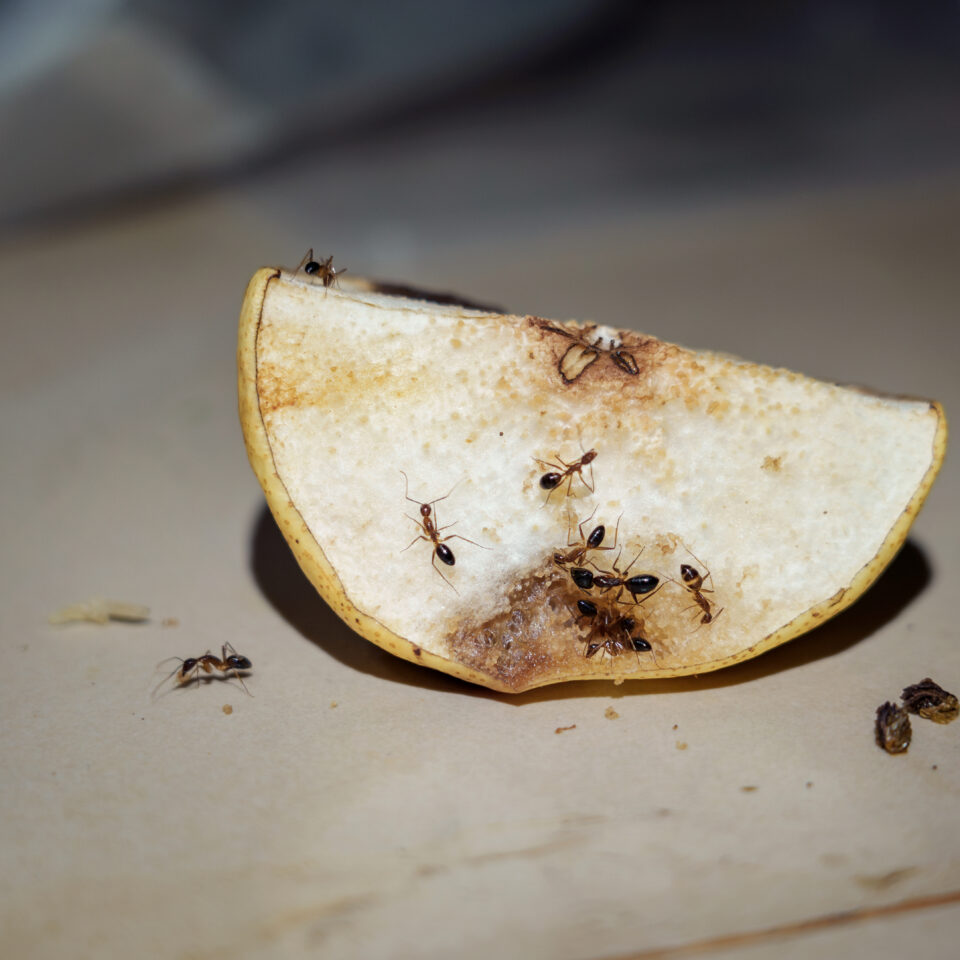
One day, your kitchen is clean. Next, there’s a trail cutting across your baseboard like it’s been there for weeks. Ants don’t announce themselves in advance, and by the time you notice them, the colony has usually been working that route for longer than you’d think.
Knowing what pulled them in is where you actually start solving it.
What Attracts Ants Into Your Home
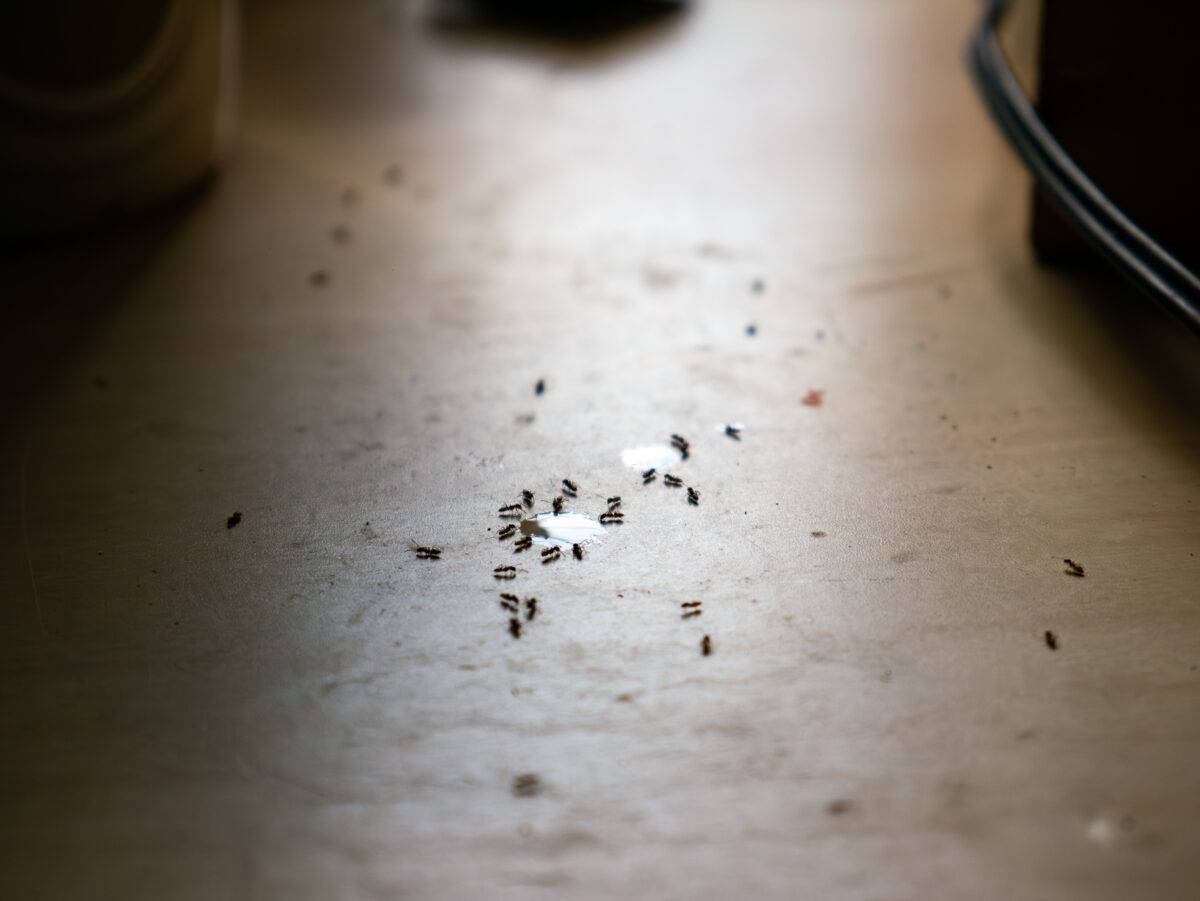
Food is the obvious answer, but most homeowners who have an ant problem also keep a reasonably clean kitchen.
Worker ants are thorough in ways that catch people off guard. Crumbs under the toaster register. So does a faint sticky residue along the counter edge, or fruit that’s been sitting out two days too long. The juice pooling at the bottom of a recycling bin. A pet bowl left out overnight. None of it needs to be large or obvious to matter.
Moisture draws them in just as reliably. A slow drip under the sink is enough. Condensation near a window frame qualifies. A damp sponge left on the counter will pull them in the same way food scraps do.
What attracts ants isn’t always a reflection of how tidy you keep things. When foraging conditions outside get difficult — whether from heat, drought, or a stretch of heavy rain — colonies move closer to structures. Your home becomes convenient. Not a comment on your cleaning habits.
How Do Ants Get Inside Your House?
Most people picture a visible gap or a crack they missed. It’s rarely that obvious. Ants are small enough that gaps your home develops naturally over the years are all they need. Settling foundation, dried-out caulk, weatherstripping that’s been compressed for years. What looks like nothing to you is workable to them.
They also don’t wander in by accident. Scout ants move ahead of the colony to locate a food or water source, then lay a pheromone trail back. By the time you’re watching a line of ants move across your floor, that trail has been reinforced by dozens of trips you didn’t catch.
Knowing which species you’re dealing with actually changes how you approach treatment, since different ants use different entry points and respond differently to bait.
Common Entry Points You Might Be Missing
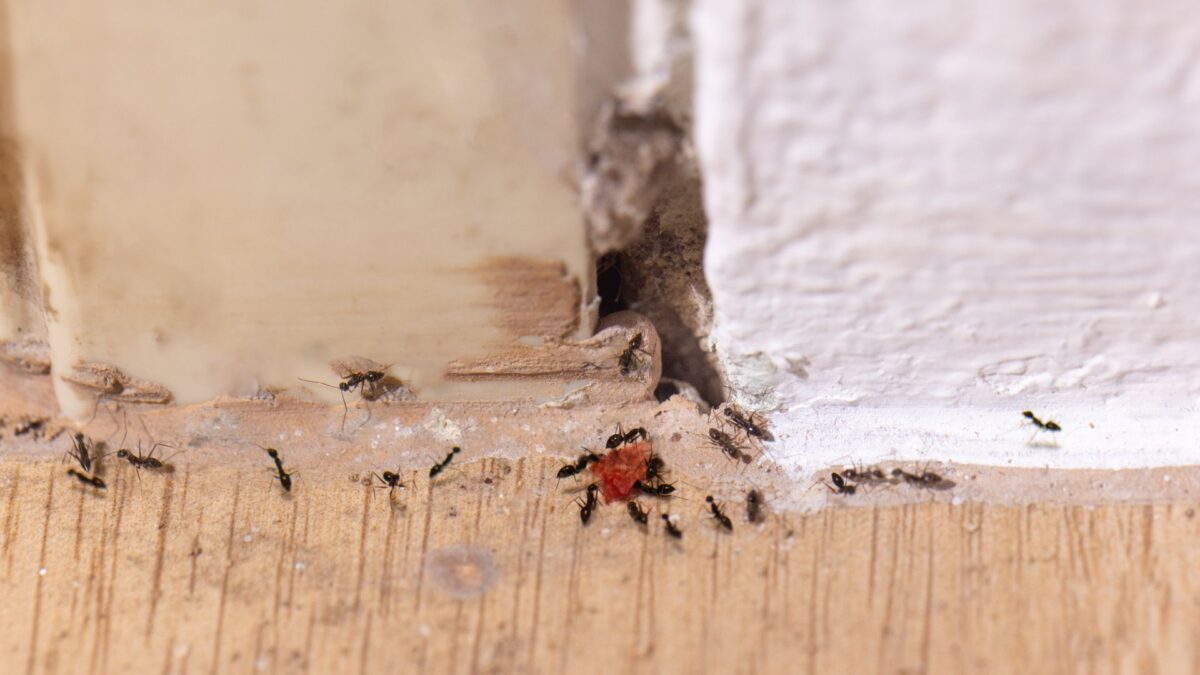
Most homeowners check door frames and windowsills and call it done. The entries that actually matter are usually somewhere else:
- Around utility pipes or cables passing through the wall under your sink — particularly if the gap wasn’t sealed when the plumbing was first installed
- Weep holes in stucco or brick exteriors. They’re intentional openings that ants treat as a direct route inside
- Hairline cracks where concrete foundation meets wood framing, especially on the shaded, north-facing side of the house
- Expansion joints along driveways or patios that run back toward the foundation
- Worn-down weatherstripping on door bottoms — the kind that compresses gradually until the gap is barely noticeable
Tree branches touching your roofline are worth checking too. Ants use them as a bridge that bypasses every seal you’ve put on the ground-level perimeter. It’s one of the more common things people miss on a first walkthrough.
Why Ants Are Worse in Spring in Marin County
Spring ant pressure in Marin County isn’t random, and it doesn’t mean something changed inside your home. Colonies that stayed relatively dormant through winter start expanding again as temperatures rise. Queens ramp up egg production. Worker populations grow fast. As the colony fills out, the foraging range expands with it — more scouts moving farther out, and more of them ending up inside houses.
Rain makes it worse. Marin gets meaningful spring rainfall, and saturated soil forces ground-nesting ants upward and outward. That displacement pushes foragers and rain refugees toward any dry structure nearby. Homes near hillsides, mature landscaping, or dense ground cover feel that pressure first.
Pest activity following storms is a pattern Marin homeowners deal with almost every year. Consistent enough at this point that it’s less an outlier and more a seasonal expectation.
Why ants are in your house in March or April usually isn’t about anything you did differently. It’s about the colony cycling back into full activity, with your home sitting in the middle of their expanded foraging range.
How to Get Rid of Ants in Your House
Start with what’s pulling them in, not with the ants themselves. Seal dry goods in airtight containers. Fix dripping faucets. Pull your stove and refrigerator out periodically — the buildup behind and beneath those appliances sustains more ant trails than most people realize, and it’s rarely the first place anyone checks.
Finding where ants are coming from takes patience. Follow the trail away from the food source, not toward it. That direction leads back to the entry point. Sealing it with caulk or fresh weatherstripping before you treat anything is critical. Close the gap first. Treat the ants without closing it and the next wave comes through the same place in a week.
For an active infestation, baiting consistently outperforms spraying. Contact sprays kill the workers you can see, but the colony stays intact and sends more. Bait gets carried back to the nest. It takes longer to show results, but it’s working on the source, not the surface.
Gel bait along baseboards and near active trails generally performs better than granules for indoor infestations. If activity hasn’t dropped after two weeks of consistent baiting, the nest is likely inside a wall void or under the slab. More bait won’t solve that. That’s when professional treatment becomes the practical next step rather than a last resort.
Get Professional Ant Control from North Point Pest Solutions
If you’ve sealed gaps, cleaned thoroughly, and watched the trails come back anyway, the colony is somewhere you can’t reach with what’s available at a hardware store. We work with Marin County homeowners to find where nesting activity is actually happening and treat it directly. Spring pressure moves fast here. Reach out to us and let’s get a clear picture of what you’re dealing with before the season gets ahead of you.