


As we head into February, many North Bay homeowners discover mysterious damage to rugs and clothing. Meet the “Varied Carpet Beetle,” the silent destroyer of natural fibers.
It is early February in the North Bay. The heavy rains of January have hopefully subsided, and while it is still chilly, we are starting to look toward spring. You might be reorganizing your closet, pulling out a wool coat for a night out, or vacuuming under the sofa for the first time since the holidays.
Then you see it: a small, irregular hole chewed right through your favorite merino wool sweater. Or perhaps you notice a patch of missing pile on your expensive oriental rug.
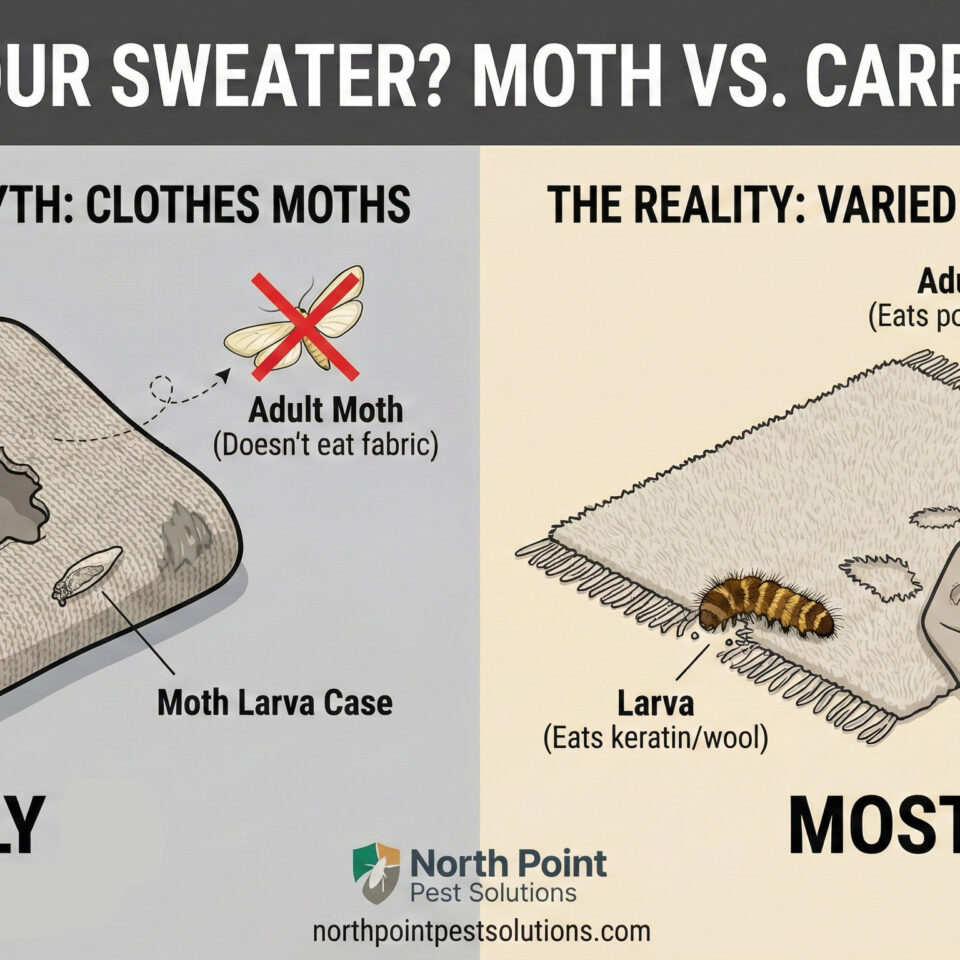
The immediate reaction is almost always: “I have clothes moths!”
However, here in Benicia and the surrounding region, moths are actually the less likely culprit. The true villain is often smaller, sneakier, and far more common: the Varied Carpet Beetle.
Mistaken Identity
Carpet beetles are perhaps the most misunderstood pest we encounter. The adult beetles are tiny—about the size of a pinhead—with a mottled pattern of brown, white, and yellow scales. They look a bit like miniature, colorless ladybugs.
You might see the adults on windowsills this month, trying to get outside to feed on pollen (which is their adult diet). Seeing an adult beetle is annoying, but they are harmless.
The danger lies with their children.
The larvae of the carpet beetle are known as “woolly bears.” They are small, hairy, worm-like creatures that hide in the darkest, quietest corners of your home. Unlike their parents, they do not eat pollen. They eat keratin—the protein found in animal fibers.
Why Is Damage Showing Up Now?
We often get calls in February and March about fabric damage because the larvae have been feeding quietly all winter.
While you were busy with the holidays, these larvae were tucked away in the back of your closet, under the heavy furniture you rarely move, or in the folds of blankets stored in the attic. They thrive in undisturbed areas.
They feast on:
- Wool clothing and blankets
- Silk
- Leather and fur
- Pet hair that accumulates under beds and baseboards
- Feathers (down pillows)
- Dead insects inside wall voids
Signs You Have an Infestation
Aside from the heartbreak of finding a hole in your favorite garment, look for these clues:
- Shed Skins: As the larvae grow, they molt. You might find piles of light brown, shell-like skins in the bottom of your wardrobe or along the edges of carpets.
- The “Grazing” Look: Unlike rodents that chew jagged holes, carpet beetles often graze the surface of wool rugs, leaving threadbare spots that look like the fabric has been shaved down.
- Fecal Pellets: Tiny pellets, about the size of a grain of salt, found near the damaged area.
How to Stop the Destruction
Fighting carpet beetles is primarily a battle of sanitation and exclusion. Because they can feed on something as simple as a dust bunny made of dog hair, they can survive in almost any home.
- The Deep Vacuum: This is your best weapon. Move the heavy furniture. Vacuum the dark corners of closets and along baseboards where pet hair accumulates. You need to remove their food source (lint and hair) and the eggs/larvae themselves.
- Inspect Stored Items: If you have woolens or silks stored in cardboard boxes, check them now. Wash or dry-clean them, and transfer them to sealed plastic bins or vacuum-sealed bags. Carpet beetle larvae can easily chew through cardboard.
- Check the Cut Flowers: Adult beetles often hitch a ride inside on cut flowers brought in from the garden. Shake out fresh bouquets before bringing them indoors.
When to Call the Pros
If you have vacuumed thoroughly but are still finding damage or seeing the hairy larvae, the infestation may be widespread. Carpet beetles often nest in wall voids where they feed on dead insects (like old wasp nests) or insulation material, making them impossible to reach with a vacuum.
Don’t let these silent destroyers ruin your wardrobe or your heirlooms. If you suspect carpet beetles, contact North Point Pest Solutions. We can identify the source and apply targeted treatments to protect your home’s fabrics.
Save your sweaters—call us today!