


No. Wolf spiders in California aren’t dangerous to people or pets. They can bite if trapped or squeezed, but their venom causes only mild swelling, redness, or itching, similar to a bee sting. Serious reactions are rare. The bigger risk is mistaking a California wolf spider for a black widow or brown recluse, which do carry more dangerous venom.
Seeing more wolf spiders around your Novato or Marin County home this August? We handle wolf spider exclusion and control every day as part of our residential pest control services. Call us at 415-895-2827 for a free inspection.
What Does a Wolf Spider Look Like?
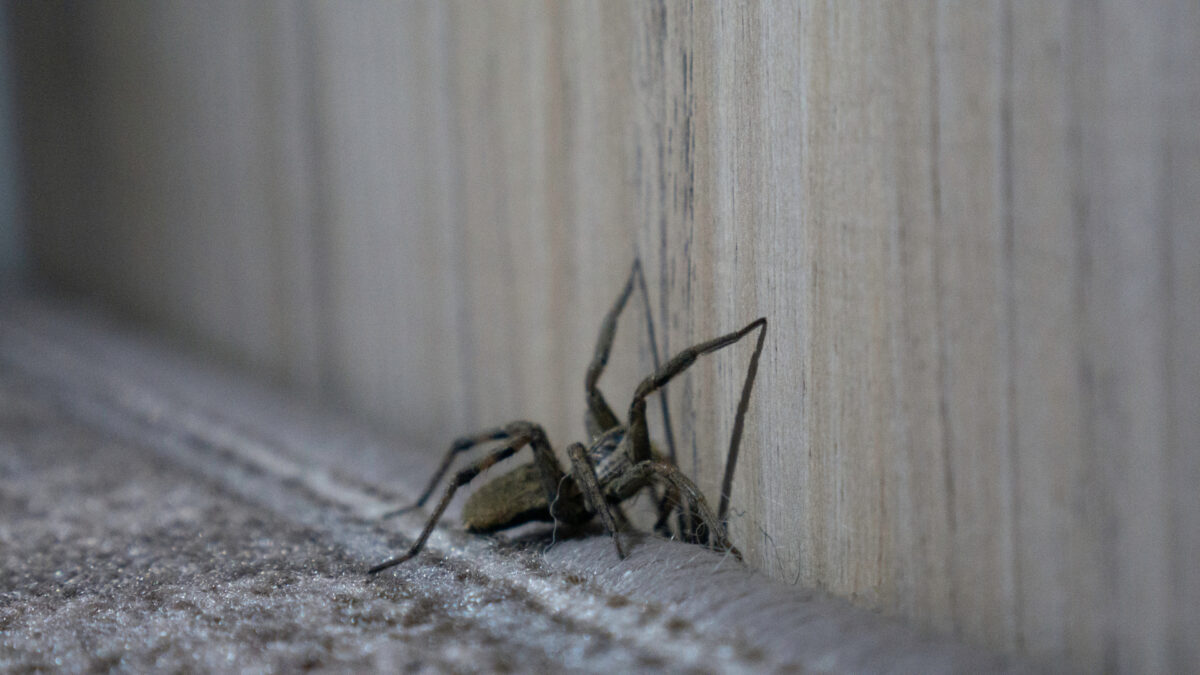
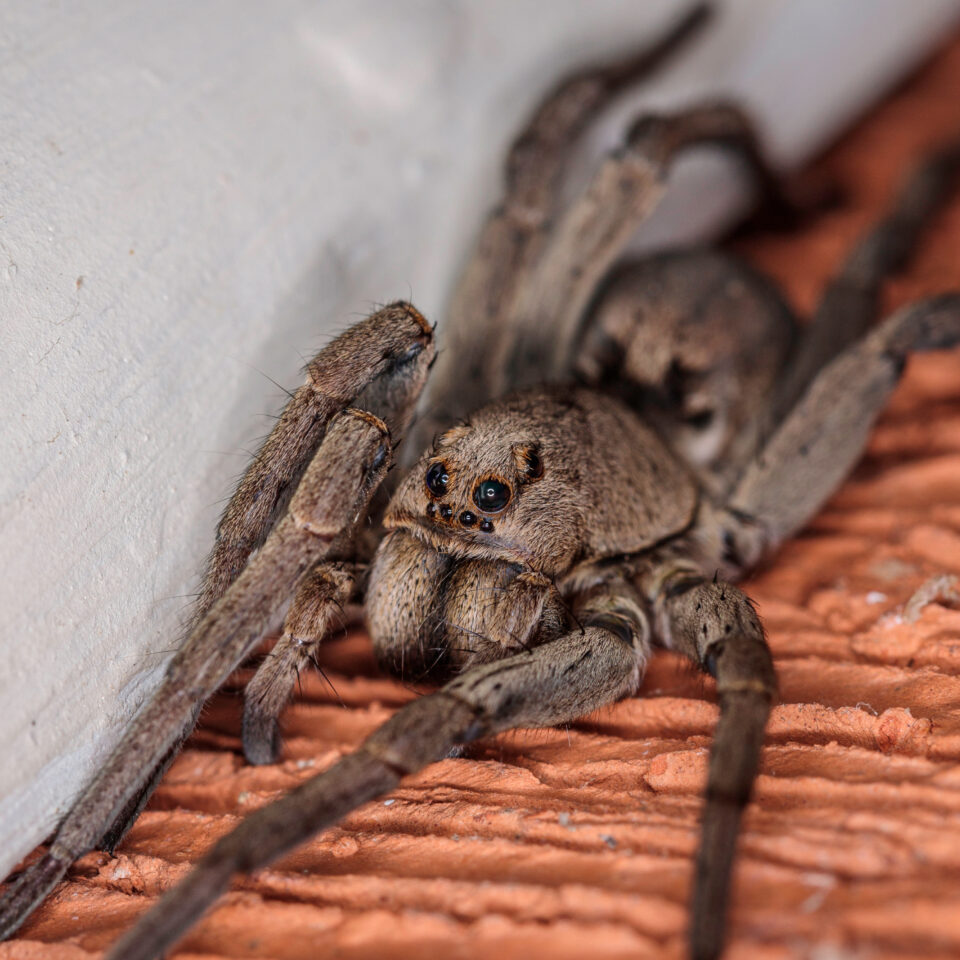
Three rows of eyes are the giveaway most people miss. That arrangement is what makes a wolf spider’s eyes catch a flashlight beam at night, and it’s one of the fastest ways to rule out a common house spider. The body runs gray to brown with a mottled or striped pattern, built low and hairy, usually somewhere between half an inch and two inches long.
We get calls from homeowners who mistake one for something more sinister, usually a tarantula, because of the size and the hair. For a broader look at what else shows up alongside them, our guide to North Bay spiders covers several common look-alikes. A few features to check on a wolf spider specifically:
- Brown, gray, or tan coloring with a mottled pattern
- Built low and hairy, with legs longer than they look at first glance
- Three rows of large, prominent eyes
- Moves fast enough that most people assume it’s aggressive
Why Do Wolf Spiders Run Toward You?
A wolf spider doesn’t chase people. It hunts on the ground instead of building a web, so it relies on speed to escape danger rather than to attack.
If one runs toward you, your foot or your shadow probably blocked its exit route. Startled and cornered, it reacts the only way it knows how: fast, in whatever direction looks open. Give it a clear path and it’ll take the opposite direction every time.
Do California Wolf Spiders Bite?
Reach into a storage box that’s been sitting untouched since spring, and there’s a decent chance something’s using it as a hideout. That’s usually when a wolf spider bite happens, not out of aggression, but because the spider felt trapped with no way out.
A wolf spider bite in California usually causes redness, mild swelling, or itching that fades within a day or two. We rarely see a case that needs more than an ice pack and some patience. If swelling spreads or a bite looks infected, that’s worth a call to a doctor. On its own, though, a wolf spider bite isn’t a medical emergency, and most people never notice more than a small welt.
Ready to stop worrying about what’s hiding in your garage or crawl space? Our team inspects, seals entry points, and treats the areas wolf spiders actually use, not just the rooms where you happen to see them.
Are Wolf Spiders Dangerous to Pets?
Pets get curious, and curiosity is usually what leads to a bite. A curious dog or cat is more likely to get bitten than a person, because pets investigate with their nose or paw first. Even then, bites are uncommon and usually mild. Watch for swelling or irritation at the site, and check in with your vet if it doesn’t settle down within a day.
Cutting down on the insects in your yard is one of the better ways to keep wolf spiders from having a reason to come inside at all, since less prey outdoors means less reason to hunt near your door.
Where Do Wolf Spiders Hide Indoors?
Older homes around Novato check almost every box a wolf spider is looking for: dark, quiet, and cluttered enough to disappear into. A spider sighting inside often means something else, like a moisture issue or an insect population, is drawing them in rather than the spider itself being the real problem. Here is where we find them most:
- Basements, garages, and crawl spaces
- Storage boxes and clutter, especially anything undisturbed for months
- Along baseboards and under furniture
- Gaps around doors and windows
Cut down on the insects and the clutter, and the spiders tend to follow the food elsewhere on their own.
How Do Wolf Spiders Get Into a House?
A cracked foundation or a torn window screen is usually all it takes. Firewood, boxes, and outdoor gear brought in from the garage carry them inside too, usually by accident rather than intent on the spider’s part.
Porch lights make it worse, since they draw in moths and beetles, and wolf spiders follow the food right up to your doorstep. Sealing those gaps is the single most effective step in any spider exclusion plan, and it’s usually less expensive than homeowners expect.
Wolf Spider or Brown Recluse?
This comparison is the one we get asked about most, and it matters because a brown recluse bite is a different story medically than a wolf spider bite. A wolf spider has three rows of eyes, a hairy body, and a fast, roaming gait across open floors.
A brown recluse has six eyes arranged in pairs, a violin-shaped mark on its back, and moves far more slowly, staying hidden most of the time. If you’re unsure which one you’re looking at, a photo sent to our team is faster and safer than guessing on your own.
Why Wolf Spiders Move Indoors in August
Service calls for wolf spiders start climbing in late July, well before most homeowners notice anything different outside. As the hills dry out and outdoor insect activity shifts toward the end of summer, wolf spiders start looking for cooler, damper spots, and a house with the right gaps looks like an upgrade over the yard.
Cooler weather ahead brings its own shift too, since several North Bay pests begin looking for shelter as the seasons turn, and wolf spiders are usually among the first. One spider inside isn’t automatically a problem, but repeated sightings in August usually mean it’s worth checking your exclusion points before fall arrives.
Spider Control in Marin County
Wolf spiders are more of a nuisance than a threat, but nobody wants to share a house with them either. If you’re seeing more activity than usual this August, we can seal the entry points, treat the areas they’re using, and help you stop the sightings before they become a pattern heading into fall.
North Point Pest Solutions serves homeowners in Novato and throughout the rest of Marin County and the North Bay. Call us at 415-895-2827 or 707-261-0003, or book an appointment to schedule an inspection.