
It’s late March, and nesting season has officially begun. Here is why your solar panels and eaves are prime real estate, and how to protect your home before the flocks move in.
We are officially in the final stretch of March here in the North Bay. The heavy rains have subsided, the hills across Marin, Sonoma, and Solano counties are emerald green, and the wildlife is waking up. It is a beautiful time to enjoy nature—as long as nature isn’t trying to move into your attic.
As the temperatures rise, we enter the most critical part of the year for avian and wildlife activity: spring nesting season.
Right now, flocks of pigeons, swallows, and migrating bats are actively scouting the region for the safest, warmest places to raise their young. Unfortunately, the modern homes of Northern California, particularly those equipped with solar panels, offer the absolute perfect artificial habitats.
If you are hearing fluttering in the chimney, scratching in the attic, or seeing excessive bird droppings on your driveway this week, your home is likely being scouted. Here is what you need to know about the spring squatters and how to stop them.
The Solar Panel Sanctuary
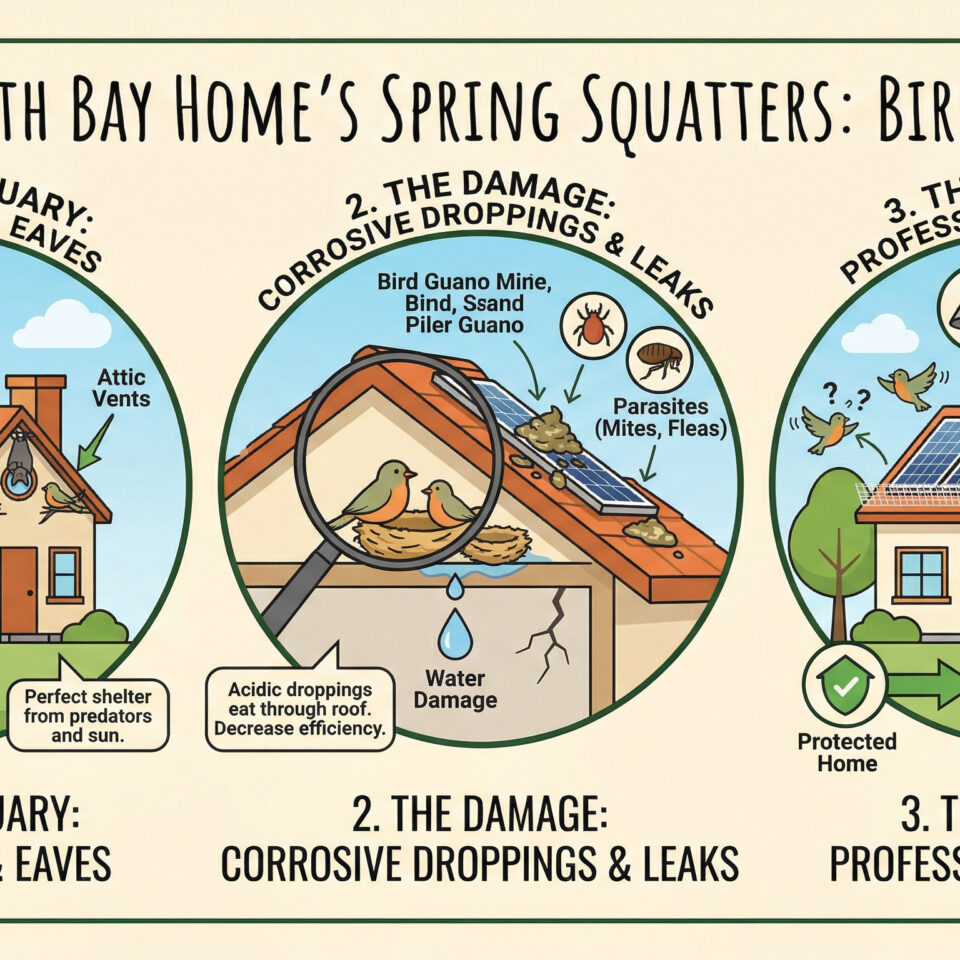
California leads the nation in residential solar energy. While solar panels are fantastic for your electricity bill, they inadvertently create a five-star resort for pigeons.
The gap between your roof shingles and the solar panels provides incredible shelter. It is shaded from the hot afternoon sun, protected from the rain, and completely safe from natural predators like hawks and owls.
When pigeons decide to nest under your panels, they bring a host of severe problems:
Corrosive Damage: Pigeon guano (droppings) is highly acidic. Over time, it will literally eat through your roofing materials, leading to severe water leaks and costly repairs.
Decreased Efficiency: Debris and droppings on the panels block sunlight, reducing the energy output of your expensive solar system.
Parasites: Bird nests are notorious breeding grounds for bird mites, fleas, and ticks, which can easily find their way into your home’s ventilation system once the nest is abandoned.
The Bat Maternity Ward
While bats are incredibly beneficial for our local ecosystem (a single bat can eat thousands of mosquitoes a night!), you absolutely do not want them living inside your walls.
In late March and early April, female bats gather together to form “maternity colonies” to give birth to their pups. They do not need a large opening to get inside; a bat can squeeze through a gap as small as three-eighths of an inch. They typically enter through damaged ridge vents, loose fascia boards, or gaps around chimneys.
Once established in your attic, a bat colony will produce a massive amount of guano. Bat guano poses a significant respiratory health risk to humans due to the fungal spores that cause Histoplasmosis, making prompt removal essential.
Why “Exclusion” is the Only Solution
When homeowners realize they have birds or bats in the roof, their first instinct is often to look for repellents or try to remove the nests themselves.
This is a critical mistake. Many bird species and bats are heavily protected by California state and federal laws. It is illegal to harm them, use toxic chemicals against them, or disrupt active nests containing eggs or flightless young.
The only legal, humane, and permanent solution is Professional Exclusion.
Exclusion is the highly specialized process of installing physical barriers—like galvanized steel mesh, custom solar panel bird guards, and one-way exit cones—that allow the animals to leave safely but make it impossible for them to return.
Secure Your Roof for Spring
Don’t wait until the nests are full of babies and the guano is piled high. Preventative exclusion is the most cost-effective way to protect your property.
At North Point Pest Solutions, we are the North Bay specialists in Bird, Pigeon, and Bat Exclusion. Whether you live in Benicia, Novato, Napa, San Rafael, or anywhere in Marin County, our licensed professionals use state-of-the-art materials to secure your roofline and solar panels for good.
Keep the wildlife in the wild this spring. Contact North Point Pest Solutions today for a comprehensive roof and solar panel evaluation! ***