



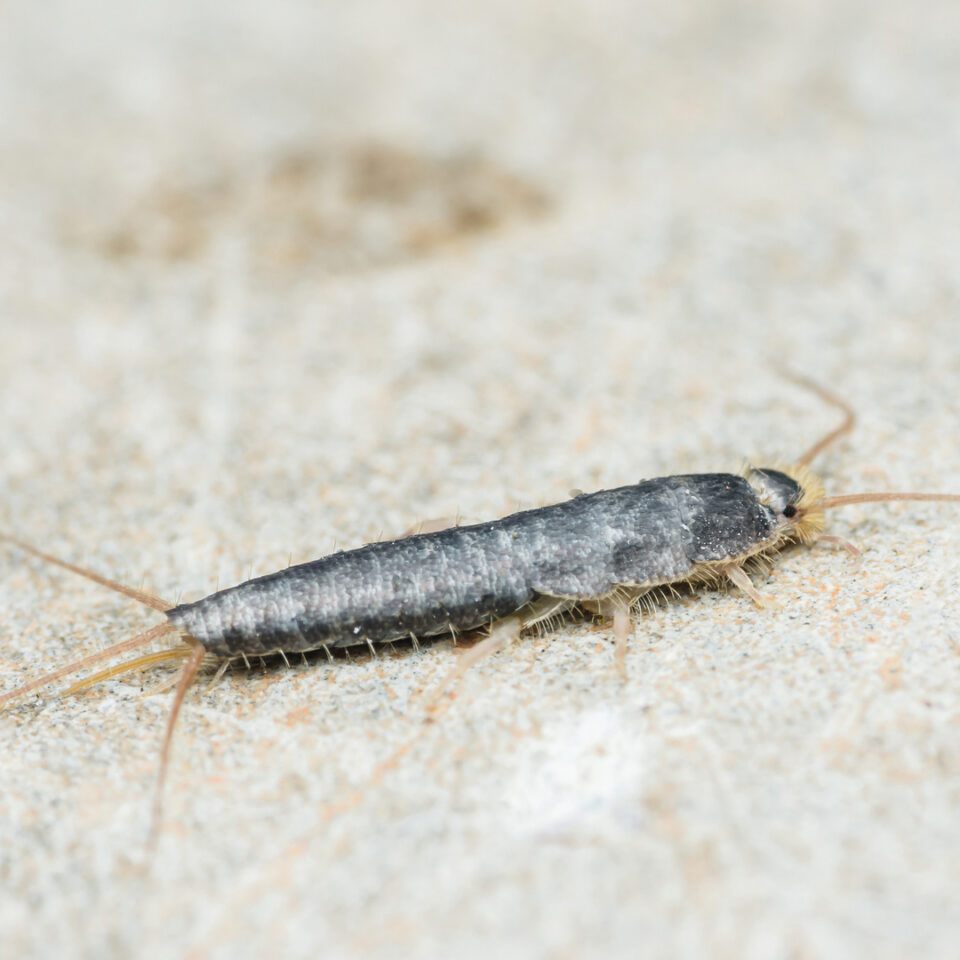
Pull a stack of old paperbacks off your Marin County bookshelf and a silver, teardrop-shaped insect darts sideways across the wall. That’s a silverfish, and finding one usually means more are living somewhere damp nearby.
Coastal humidity hangs around longer here than almost anywhere else in California, and the older homes scattered through San Rafael and Mill Valley hold onto every bit of it. Effective silverfish control starts with knowing what’s drawing them in.
What Are Silverfish and Why Are They in Your Marin County Home?
Around 400 million years old as a species, silverfish have outlasted most of what they once coexisted with. Their look hasn’t changed much either. Slim, metallic bodies. Three bristly tails out the back, two thin antennae out front. Watch one move and the name makes sense, that quick fish-tail wiggle across a tile floor.
Marin County’s climate keeps them comfortable year-round. Coastal fog rolls in most evenings from May through September, pushing humidity inside walls and crawl spaces past what silverfish need to thrive.
Older Craftsman and bungalow homes hold that moisture longer than newer construction. Stock a place with books and pantry starch on top of that, and you’ve got a population breeding quietly for months before anyone spots one.
What Silverfish Look Like and Where They Hide
A few features separate silverfish from the bugs that look like silverfish, mainly firebrats and small earwigs:
- About three-quarters of an inch long at maturity, with the unmistakable silver-gray sheen
- Teardrop body shape, wider at the head and tapering toward the tail
- Watch the tail end. Three bristly filaments fan out behind, nothing like an earwig’s pincers
- Movement is the dead giveaway every time. Silverfish dart in short bursts and freeze, never crawling steadily across a surface
Dark and damp is where you’ll find them. Bathroom sightings come from baseboards behind the toilet or inside the linen cabinet. Bedroom problems trace back to closets where stored clothing presses against an exterior wall.
Silverfish in books show up as small, irregular holes through pages or yellow staining along the edges of paperbacks left on a shelf too long.
What Attracts Silverfish and Why Marin County Homes Are Especially Vulnerable
Two things keep them around: humidity above 75 percent and a steady food source. Strip out either one and the population collapses. What causes silverfish in your home almost always traces back to a combination of both, hiding in spots most homeowners never think to check.
Moisture, Starch, Paper, and the Coastal Fog Factor
Marin’s weather sets a humidity baseline inland counties never deal with. Fog drifts in through Mill Valley and Larkspur most summer nights. Crawl spaces stay damp well into the afternoon, and attic ventilation in older homes rarely keeps up.
Food shows up in places most people never connect to a pest problem. What silverfishes eat sometimes surprises homeowners:
- Book bindings, especially the glue holding old paperbacks together
- Wallpaper paste, mostly an issue in homes that still have original mid-century paper up
- Starched linens and stored dress shirts that haven’t moved in months
- Anywhere flour or dry pet food sits in a pantry without a sealed lid
- Photos and the cardboard boxes housing them
- Dust and dead skin collecting in corners that never get vacuumed
Crawl spaces produce more silverfish nurseries than any other spot in Marin homes, and most owners never look down there. Our walkthrough on attic and crawl space prep before the wet season covers exactly what to inspect. Heavy rains push other species indoors, just as humidity draws silverfish into wall voids.
How to Get Rid of Silverfish in Your Home
Baiting silverfish out doesn’t work the way it does for ants or roaches. They eat too many different things to commit to a single station. Real silverfish insect control runs on the moisture and the food at the same time, with treatment in the harborage spots layered on top.
Baits, Dehumidifiers, and When DIY Stops Working
Where to start:
- A dehumidifier knocks the population back fast in any room sitting above 50 percent relative humidity. Bathrooms and basements need this first.
- Place silverfish bait stations along baseboards and inside closet corners to catch foragers and confirm where they’re moving. Boric acid baits handle how to kill silverfish without leaving residue everywhere.
- Sticky traps in undisturbed corners give you a count. Three or four caught in a week is a small population. Twenty caught means the nest is established somewhere close.
- Move stored books and seasonal clothing into sealed plastic bins. Cardboard absorbs moisture and feeds silverfish at the same time.
- Anywhere pipes enter walls behind sinks and toilets, caulk the cracks. Most silverfish in-house complaints trace back to one damp wall void nobody checked.
- For heavier populations, a silverfish spray with a residual insecticide labeled for crack-and-crevice use knocks numbers down. It still won’t fix what’s feeding them.
DIY handles small infestations. Once you’ve fixed the obvious moisture issues and silverfish keep showing up six weeks later, the colony has moved into wall voids or insulation where home methods can’t reach. That’s the point a pro inspection earns its cost.
Our pest control services across Marin County cover full-property silverfish treatment along with the moisture-source assessment most DIY plans skip.
Silverfish Getting into Everything? North Point Gets Rid of Them for Good
Holes chewed through paperbacks you’ve owned for years. Yellow staining on linens stored in a closet you barely open. Neither problem fixes itself, and neither one improves while the crawl space stays damp. Northpoint Pest Solutions handles the moisture source and the harborage zones at once, then clears the population already spread into multiple rooms.
Contact us before another wet season’s worth of damage piles up.